AI candidate screening uses artificial intelligence to evaluate applicants against predefined job requirements, identify relevant qualifications, conduct structured screening conversations, and prioritize candidates for recruiter review. Modern AI screening software can go beyond resume keyword matching by combining candidate data, job requirements, screening questions, scoring criteria, and interview responses into a structured evaluation.
Screening is the most commonly used application of AI in recruitment, as evidenced by the 58% of companies that use it, as mentioned in the Definitive Guide to AI Adoption in Talent Acquisition, which is a 2026 research paper by iCIMS and Aptitude Research, published on PR Newswire, based on a survey of more than 400 U.S. talent acquisition professionals. For recruiting teams, the main value is reducing the manual work involved in reviewing large candidate pools. Instead of recruiters spending hours opening resumes, making initial calls, taking notes, and comparing applicants manually, automated candidate screening can handle much of the first-stage evaluation and deliver a ranked shortlist.
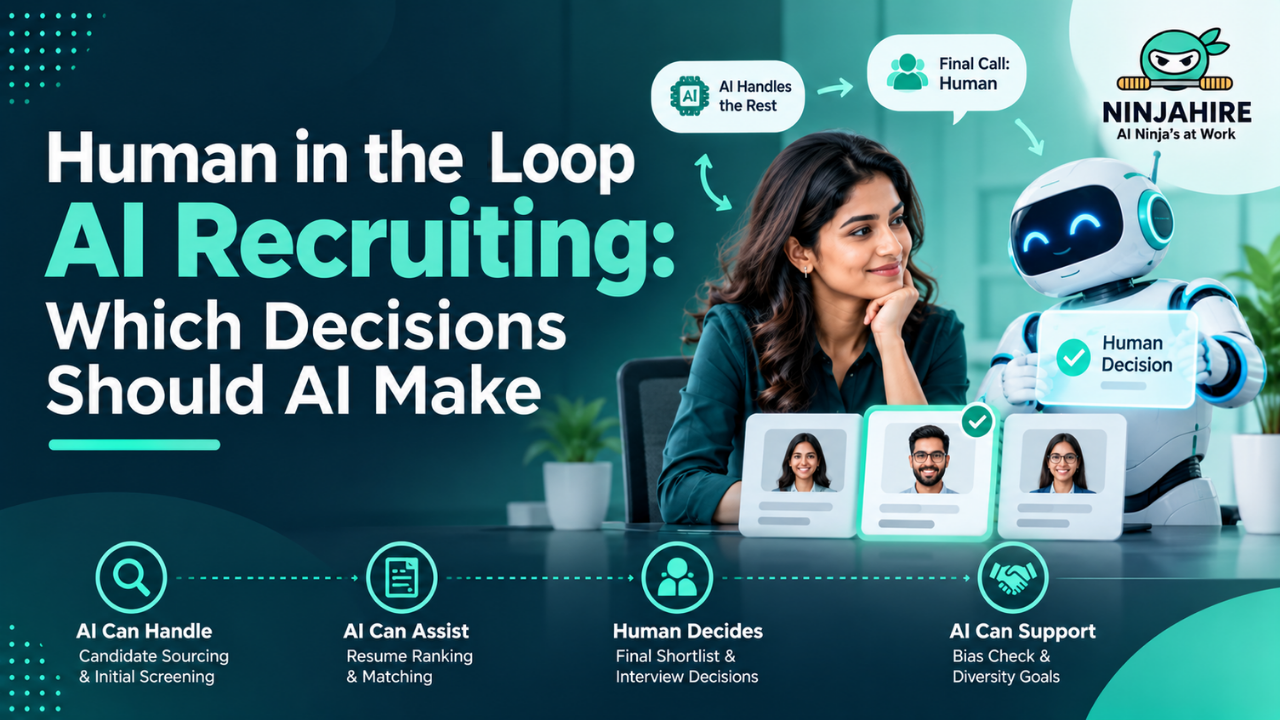
The technology does not eliminate the need for recruiters. The strongest workflow uses AI to handle repetitive screening while recruiters retain responsibility for judgment, candidate relationships, and final hiring decisions.
What Is AI Candidate Screening?
AI candidate screening is the use of artificial intelligence to assess candidates against the requirements of an open position.
Traditional screening often depends on recruiters manually reviewing resumes and applications, checking qualifications, conducting initial phone screens, and deciding who should move forward. AI candidate screening software automates parts of this process using structured criteria and candidate information.
Depending on the platform, AI screening can evaluate:
- Resume and candidate profile information
- Required skills and qualifications
- Work experience
- Education and certifications
- Location or availability requirements
- Answers to screening questions
- Knockout criteria
- Responses during AI-powered interviews
- Role-specific assessment criteria
The important distinction is that AI screening should evaluate candidates against job-related requirements rather than simply searching for matching keywords.
For example, a software engineering role may require experience with specific programming languages, cloud platforms, system design, and a minimum level of professional experience. An AI screening system can use these requirements to evaluate candidate evidence and identify which applicants warrant deeper review.
How Does Automated Candidate Screening Work?
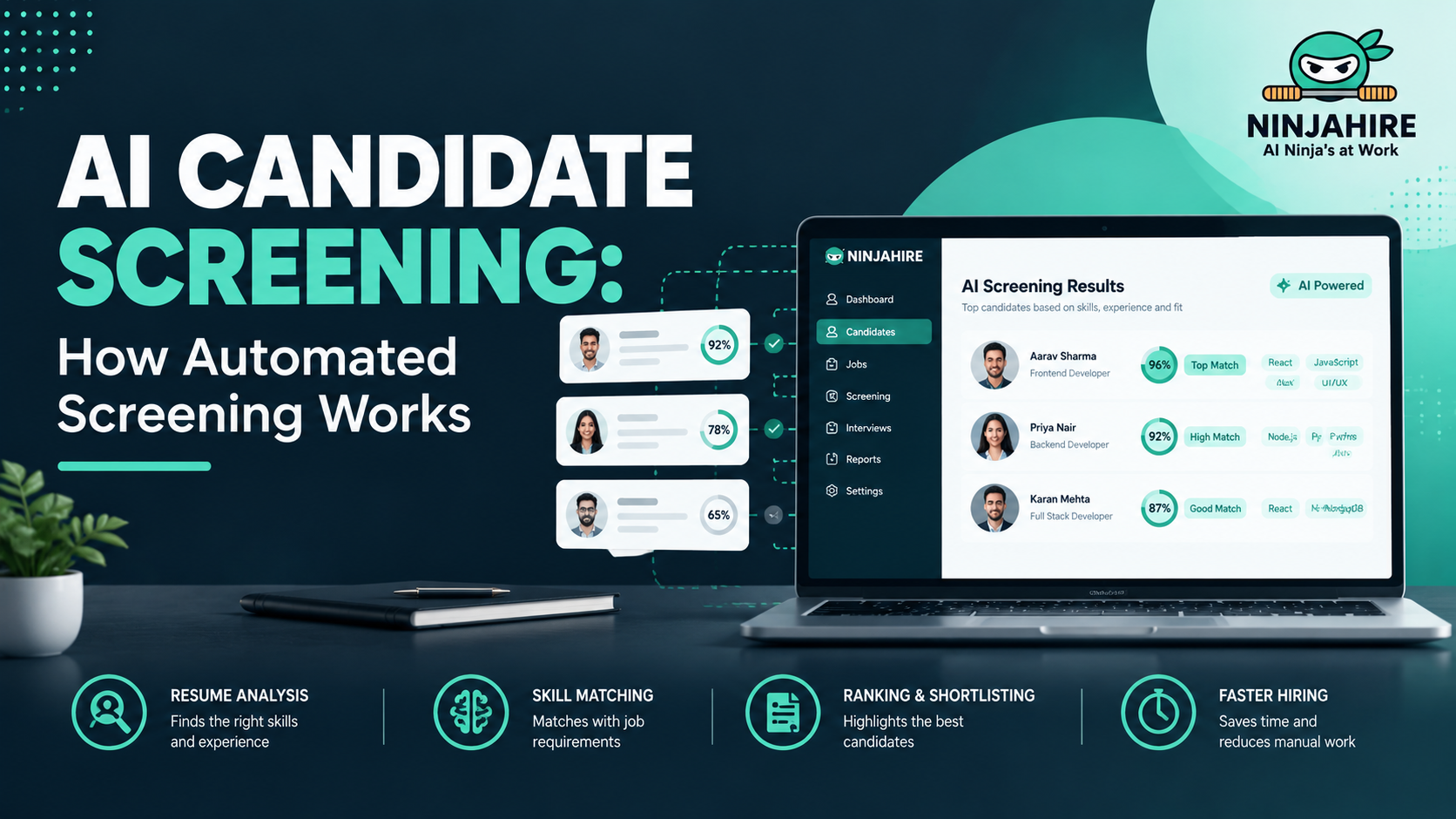
A typical AI candidate screening workflow moves from job requirements to candidate evaluation and finally to recruiter review.
1. Define the Screening Criteria
The process begins with the job description and the requirements that determine candidate fit.
Recruiters can define:
- Required qualifications
- Preferred qualifications
- Skills
- Experience thresholds
- Screening questions
- Scoring criteria
- Knockout requirements
Clear criteria matter because AI can only evaluate candidates effectively when the organization has defined what qualifies as a strong match.
2. Analyze Candidate Information
The screening system evaluates available candidate information, which may include resumes, profiles, application responses, and existing ATS records.
Instead of treating a resume as a collection of isolated keywords, more advanced systems can evaluate skills, experience, context, and relevance to the position.
This allows screening software to identify candidates whose experience may be relevant even when their resume does not use exactly the same terminology as the job description.
3. Conduct Automated Screening
Resume analysis is only one part of modern AI candidate screening.
AI screening platforms can conduct structured conversations through channels such as phone, video, or web-based interviews. The system can ask predefined questions, adapt follow-up questions, evaluate responses, and capture transcripts.
This creates another layer of evidence beyond what appears on a resume.
For example, a candidate may list project management experience, but an automated screen can ask about project scope, stakeholder management, delivery challenges, and measurable outcomes.
4. Score and Rank Candidates
The system evaluates candidates according to the configured criteria and produces structured results.
A screening workflow may include:
The purpose is not to create an unquestionable hiring decision. It is to help recruiters prioritize where human attention should go first.
5. Send Qualified Candidates Into the Recruiting Workflow
Once screening is complete, results can be transferred into the organization's existing recruiting workflow.
Depending on the platform, this can include:
- Candidate scores
- Screening summaries
- Interview transcripts
- Qualification results
- Candidate rankings
- Recruiter notes
- Next-step recommendations
ATS integrations are particularly important because recruiters should not have to maintain a separate manual spreadsheet just to use an AI screening system.
What Can AI Candidate Screening Automate?
AI candidate screening can automate several repetitive activities that traditionally consume recruiter time.
| Screening Activity | What AI Can Automate |
|---|---|
| Resume review | Extract relevant experience, skills, and qualifications |
| Candidate matching | Compare candidate profiles against job requirements |
| Pre-screening | Ask structured qualification questions |
| Phone screening | Conduct automated voice conversations |
| AI video screening | Collect and evaluate structured video responses |
| Web screening | Conduct text-based screening conversations |
| Knockout questions | Identify candidates who do not meet mandatory criteria |
| Scoring | Apply predefined evaluation criteria consistently |
| Candidate ranking | Prioritize candidates based on screening results |
| Documentation | Generate summaries and transcripts |
| Workflow movement | Transfer qualified candidates to the next recruiting stage |
This is particularly useful for high-volume recruiting.
Consider a staffing agency receiving hundreds of applicants for a recurring technical or operational role. A recruiter may not have enough time to conduct a meaningful first-round screen with every applicant. Automated candidate screening can evaluate the initial pool, collect structured responses, and provide recruiters with a smaller group requiring deeper attention.
The recruiter can then spend more time interviewing strong candidates, communicating with clients, managing expectations, and closing placements.
What Should You Look for in AI Screening Software?
Choosing candidate screening software requires more than checking whether a platform has an “AI screening” feature.
Job-Specific Screening and Scoring
The platform should allow recruiters to define what matters for each position.
Look for configurable scoring rubrics, qualification criteria, screening questions, and knockout requirements rather than a generic score that cannot be explained.
Multiple Screening Formats
Different candidates respond better to different formats. Depending on the recruiting environment, useful options can include phone, video, and web-based screening.
For high-volume staffing, automated phone screening can be particularly useful because it allows candidates to complete an initial interview without requiring a recruiter to manually place every call.
Explainable Results
Recruiters need to understand why a candidate received a particular score.
A useful screening system should provide evidence such as candidate responses, transcripts, matched qualifications, and evaluation summaries rather than presenting a score without context.
ATS and Workflow Integration
AI screening becomes less useful if recruiters have to manually move results between systems.
Look for integrations with the ATS, CRM, VMS, or recruiting workflow already used by the organization. Results should flow naturally into the existing process.
Human Oversight
AI should support recruiting decisions rather than remove accountability from them.
Recruiters should be able to review candidate evidence, override automated recommendations when appropriate, and determine who progresses to the next stage.
Candidate Experience and Responsible Use
Screening technology interacts directly with job applicants, so candidate communication matters.
Candidates should understand when AI is being used in the process, what information is being evaluated, and how they can request appropriate accommodations where applicable.
In the US, employers remain responsible for ensuring that selection procedures comply with applicable employment discrimination laws. The EEOC notes that employment selection procedures can create unlawful disparate impact and that employers should ensure screening procedures are job-related and appropriately validated.
What Are the Benefits and Limitations of AI Candidate Screening?
The primary benefit of AI candidate screening is scale.
Recruiting teams can evaluate more candidates without increasing screening workload at the same rate. LinkedIn's 2025 Future of Recruiting research found that 37% of talent acquisition professionals surveyed were experimenting with or actively integrating generative AI into hiring, and those users reported saving an average of 20% of their workweek.
SHRM reported in 2026 that 51% of organizations were using AI in recruitment, with candidate screening, skills matching, candidate engagement, and interview scheduling among the areas where AI can automate work.
Other potential benefits include:
- Faster initial candidate evaluation
- More consistent application of screening criteria
- Greater recruiter capacity
- Faster response to applicants
- Better documentation of screening conversations
- More structured candidate comparisons
- Reduced administrative workload
There are also limitations.
AI screening depends on the quality of the job criteria and the data being evaluated. Poorly defined requirements can produce poor screening outcomes. Automated systems can also introduce bias or create accessibility problems if they are not properly designed, tested, and monitored.
NIST's AI Risk Management Framework recommends managing AI risks through considerations such as validity, reliability, transparency, explainability, privacy, and fairness.
For that reason, AI candidate screening works best as a controlled decision-support workflow rather than an invisible replacement for recruiter judgment.
Where Does Ninjahire Fit Into AI Candidate Screening?
Ninjahire provides an AI screening workflow designed for recruiting teams and staffing agencies that need to evaluate candidates at scale.
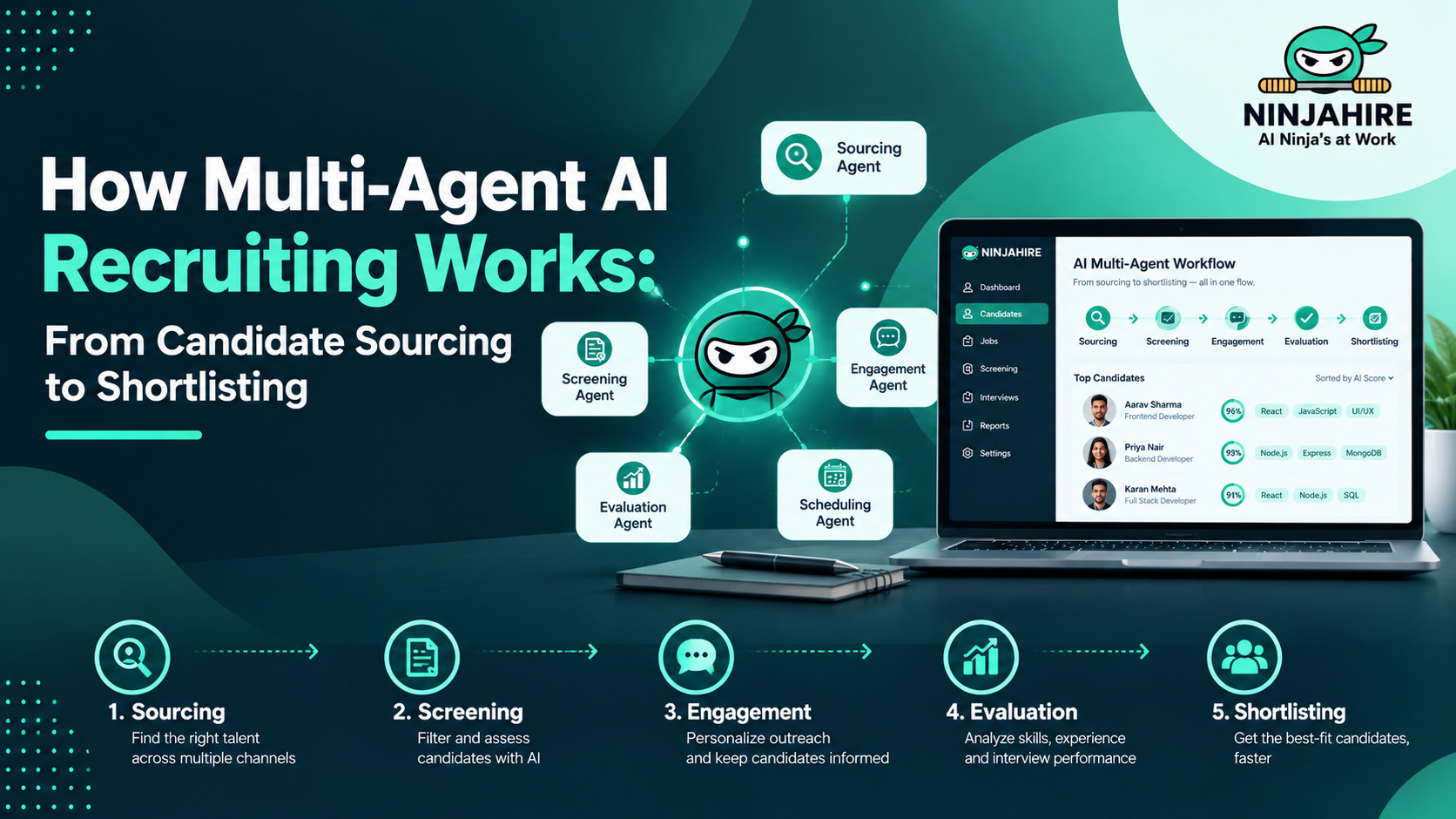
Its AI Screening Agent can conduct phone, video, and web-based screening conversations, apply customizable scoring rubrics and knockout criteria, ask questions based on candidate resumes, and produce ranked results with transcripts and summaries. The platform states that its screening agent can handle up to 100 parallel screening conversations.
The workflow can begin with AI candidate sourcing and continue through outreach and screening. Ninjahire's AI Recruiter combines sourcing, outreach, and screening agents so that candidates can move from initial matching into automated engagement and then into AI-powered screening.
This approach is particularly relevant for staffing agencies and recruiting teams handling large candidate volumes. Instead of treating screening as an isolated resume-review step, the workflow connects candidate discovery, engagement, screening, ranking, and recruiter review.
The final decision still belongs with the recruiting team. AI handles the repetitive evaluation work while recruiters focus on qualified candidates, hiring-manager relationships, candidate experience, and placement decisions.
Conclusion
AI candidate screening is evolving from simple resume filtering into a broader evaluation workflow. Modern AI screening software can analyze candidate information, match qualifications to job requirements, conduct structured screening conversations, score responses, rank candidates, generate summaries, and move qualified applicants into existing recruiting workflows.
The most effective implementation is not simply the one that screens the largest number of candidates. It is the one that combines relevant job criteria, structured evaluation, transparent evidence, workflow integration, responsible AI practices, and meaningful recruiter oversight.
For recruiting teams evaluating AI screening software, the key question is therefore not just, “Can this platform screen candidates?”
The better question is: Can it screen candidates consistently, explain the results, integrate with the recruiting workflow, and give recruiters better information for making human decisions?