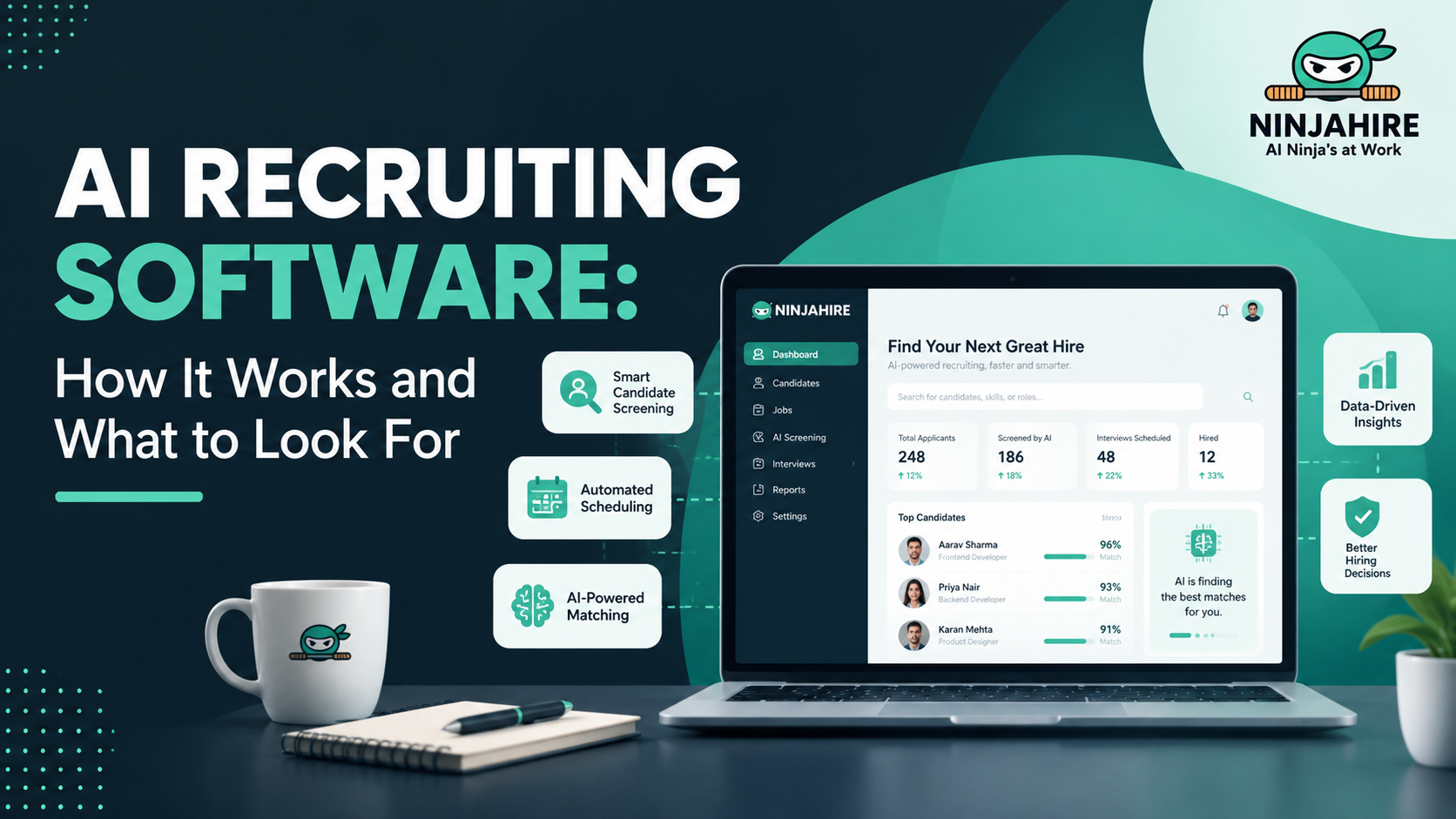
AI recruiting software uses artificial intelligence to automate repetitive parts of the hiring process, including candidate sourcing, matching, outreach, screening, interviewing, and recruiting workflow coordination. Instead of requiring recruiters to manually move candidates through every stage, AI can execute defined tasks continuously and deliver structured results for human review.
For recruiting teams, the value is not simply automation. The right platform can help recruiters find candidates faster, engage them across multiple channels, screen applicants consistently, and move qualified candidates into an ATS or VMS without repeated manual data entry.
The market is already moving in this direction. According to the Employ's 2025 Recruiter Nation Report, 65% of survey participants said they were using AI technology in order to improve recruiting tools. Moreover, it was discovered that 41% of survey participants used AI technologies in order to get recommendations about job descriptions. Another 41% of survey participants were using AI in order to provide information to candidates.
The key question for buyers is therefore not simply whether to use AI.
It is which recruiting activities should be automated, and what capabilities should an AI recruiting platform have to support the entire workflow?
What Is AI Recruiting Software?
AI recruiting software is technology that applies artificial intelligence to recruiting activities such as finding candidates, matching profiles to job requirements, communicating with candidates, conducting interviews, evaluating responses, and managing candidate workflows.
A modern AI recruiting platform can combine several functions:
- AI candidate sourcing
- Talent rediscovery
- Candidate matching
- Automated outreach
- AI phone screening
- AI video interviews
- Web-based interviews
- Candidate scoring
- Candidate ranking
- ATS synchronization
- VMS integration
- Recruiting workflow automation
The difference between an AI recruiting tool and an AI recruiting platform is often the breadth of the workflow it can manage.
A standalone AI screening agent may only evaluate candidates already in an ATS. A broader platform can start with a job requirement, source candidates, engage them, screen interested candidates, and deliver a qualified shortlist.
Ninjahire describes its platform as a full-stack AI recruiting system combining sourcing, outreach, and screening agents, with ATS and VMS integrations designed for high-volume recruiting workflows.
How Does AI Recruiting Software Work?
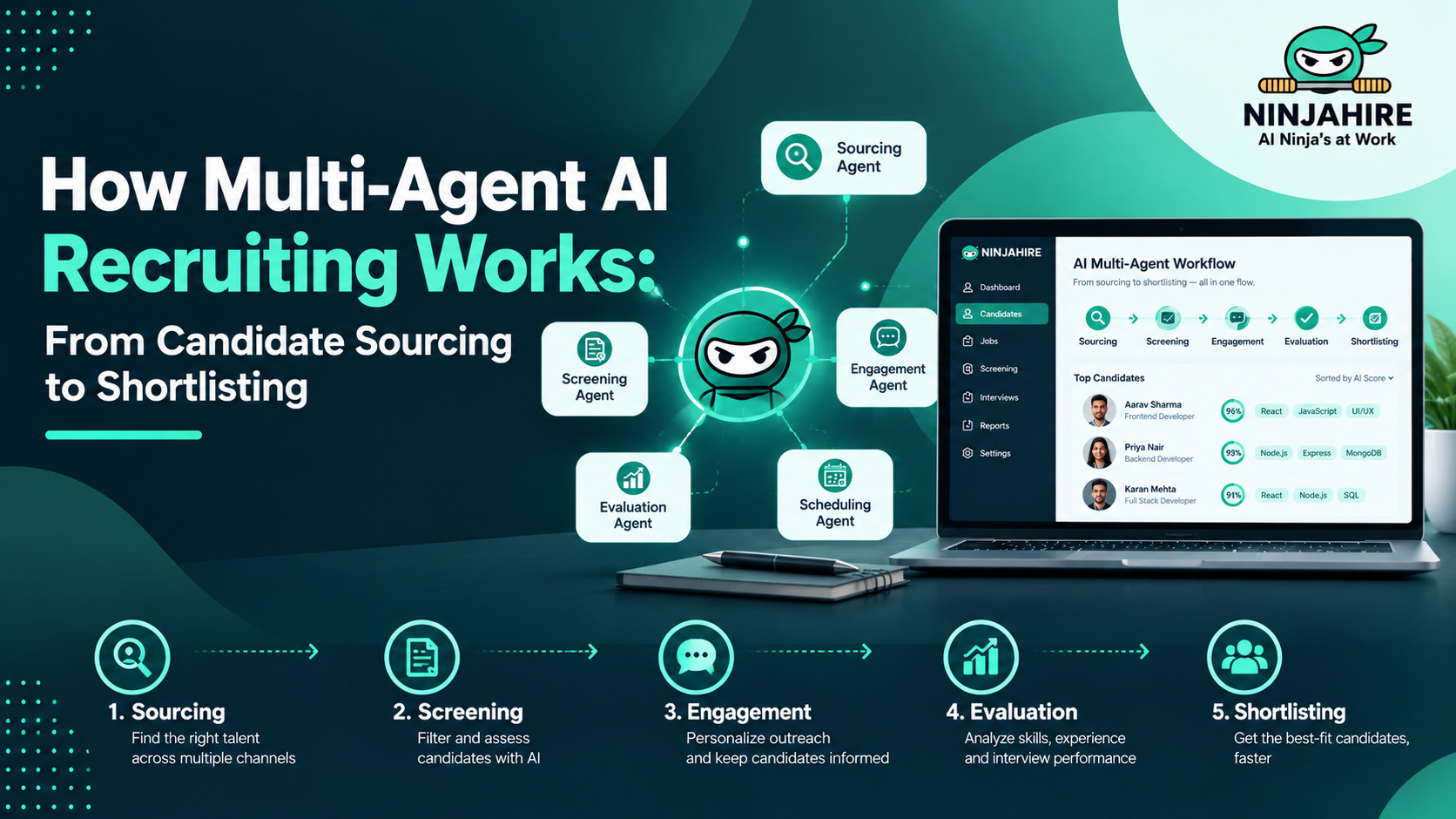
The exact implementation varies between platforms, but an end-to-end AI recruiting workflow generally follows this sequence:
1. Define the Role
The recruitment team will supply details such as job description, required qualifications, ideal candidate profile, etc.
AI will be able to read and interpret the requirements instead of matching only keywords.
Example: Let us consider that an organization is looking for a Cloud Engineer who should have AWS, automation of infrastructure, and deployment skills. The first candidate's profile has “AWS infrastructure management,” and the second one has “cloud operations” and “automation using Terraform.” Though both have used different wording, AI will be able to figure out whether they are the right fit for the job.
The process flow at Ninjahire begins with the capability of allowing AI recruiters to write about the job position along with the necessary qualifications for the position in plain English.
2. Source and Match Candidates
AI recruiting software can search candidate databases, ATS records, talent graphs, and external job sources.
An important capability here is talent rediscovery.
Before searching externally, an AI platform can identify candidates already stored in the company's ATS or CRM who match the new requirement.
Ninjahire's AI sourcing workflow uses three sourcing layers: the connected ATS or CRM, its Ninjagraph talent graph, and external job boards. The platform says its Ninjagraph contains more than 2.4+ billion professional profiles.
AI matching then ranks candidates according to the job requirements.
3. Engage Candidates
Finding a candidate is only the beginning.
AI recruiting software can automate outreach after suitable candidates are identified.
Depending on the platform, outreach may include:
- SMS
- Phone
- Automated follow-ups
- Response tracking
- Interview invitations
Ninjahire's outreach agent supports personalized multi-channel engagement through email, SMS, phone, WhatsApp, and LinkedIn, with customizable workflows and automated follow-ups.
This creates a direct connection between sourcing and engagement instead of forcing recruiters to export candidates and manually initiate outreach.
4. Screen Candidates
Once candidates respond, AI can conduct initial screening.
Screening may evaluate:
- Required qualifications
- Skills
- Experience
- Availability
- Compensation expectations
- Role-specific criteria
- Knockout questions
- Candidate responses
AI screening can happen through phone, video, or web-based interviews.
Ninjahire's screening agent supports phone, video, and web-based screening, applies customizable scoring criteria, and produces ranked results and transcripts for recruiter review.
5. Rank and Prioritize Candidates
AI can convert large volumes of candidate information into a prioritized shortlist.
Instead of recruiters reviewing every candidate equally, the system can identify candidates who most closely match the configured requirements.
A useful output might include:
Candidate profile → Match assessment → Screening score → Transcript → Strengths/weaknesses → Recruiter review
The objective is not to remove recruiter judgment. It is to make the recruiter review process more focused.
6. Move Candidates Into the Recruiting Workflow
The final stage is connecting AI-generated results to the systems recruiters already use.
A platform should ideally synchronize:
- Candidate profiles
- Screening results
- Interview transcripts
- Scores
- Communication history
- Candidate status
- Recruiter notes
Ninjahire states that it integrates with 50+ ATS platforms and six native VMS platforms, allowing candidate information and screening results to move into existing recruiting workflows.
This integration layer is important because automation loses much of its value if recruiters still have to manually copy information between systems.
What Can AI Recruiting Software Automate?
The best AI recruiting software automates repetitive work while leaving high-value decisions with recruiters.
| Recruiting Activity | Potential AI Automation | Human Role |
|---|---|---|
| Candidate sourcing | Search and candidate discovery | Define sourcing strategy |
| Talent rediscovery | Search existing ATS/CRM | Validate previous candidate relationships |
| Candidate matching | Profile-to-role matching | Review unusual or borderline profiles |
| Outreach | Personalized sequences | Handle sensitive conversations |
| Follow-ups | Automated responses and reminders | Manage exceptions |
| Resume screening | Candidate prioritization | Review qualified profiles |
| First-round interviews | AI phone, video, or web screening | Review results |
| Candidate scoring | Rubric-based evaluation | Challenge or validate results |
| Candidate ranking | Automated prioritization | Decide who progresses |
| Scheduling | Workflow automation | Handle complex scheduling |
| ATS updates | Automated synchronization | Review important records |
| Final hiring decision | Decision support | Human-owned |
The goal is not maximum automation. The goal is appropriate automation.
What Should You Look For in AI Recruiting Software?
A buyer should evaluate an AI recruiting platform across the entire workflow rather than focusing on one impressive feature.
1. AI Sourcing and Candidate Matching
Look for software that can search more than one source and interpret candidate relevance beyond exact keyword matches.
Important questions include:
- Can it search the existing ATS or CRM?
- Does it support talent rediscovery?
- How broad is its candidate coverage?
- Can it understand related skills?
- Does it rank candidates automatically?
- Can recruiters refine the search?
Ninjahire's sourcing architecture combines ATS/CRM rediscovery, Ninjagraph, and external job-board sourcing.
2. Multi-Channel Candidate Engagement
Candidate sourcing has limited value if candidates are not contacted effectively.
Evaluate whether the platform supports:
- Personalized messages
- Multiple communication channels
- Automated follow-ups
- Response detection
- Scheduling
- Candidate-specific workflows
The best approach is to connect sourcing directly to outreach so recruiters do not have to manually export candidate lists.
3. AI Screening and Interviewing
This is one of the most important areas to evaluate.
Check whether the platform supports:
- Phone screening
- Video interviews
- Web interviews
- Resume-aware questions
- Adaptive follow-ups
- Custom scoring rubrics
- Knockout criteria
- Transcripts
- Candidate summaries
- Candidate rankings
Ninjahire's AI Interviewer supports phone, video, and web interviews, resume-personalized questioning, scoring rubrics, knockout criteria, transcripts, and ranked candidate results.
4. ATS and VMS Integrations
Integration should be evaluated before implementation, not afterward.
Ask:
- Does the platform integrate with the existing ATS?
- Does candidate data synchronize automatically?
- Are screening scores transferred?
- Are transcripts available in the candidate record?
- Does it support the VMS used by enterprise clients?
- Is the integration one-way or bidirectional?
For staffing agencies, VMS support can be especially important because enterprise MSP programs often require specific systems and workflows.
Ninjahire currently lists native integrations with Beeline, SAP Fieldglass, Coupa, VectorVMS, Magnit WAND Pro, and Flentis/ElevateVMS, alongside 50+ ATS integrations.
5. Workflow Configuration
AI recruiting software should adapt to the recruiting team's process.
Look for configurable:
- Scoring rubrics
- Knockout criteria
- Outreach templates
- Follow-up timing
- Interview questions
- Candidate stages
- Client-specific workflows
- Approval rules
This is particularly important for staffing agencies managing multiple clients.
Ninjahire supports separate templates, rubrics, and workflows for multiple client recruiting campaigns.
6. Human Oversight and Transparency
Automation should not mean that recruiters lose control.
The platform should make it clear:
- Why a candidate was prioritized
- What criteria were applied
- What information was analyzed
- What the AI produced
- Where recruiters can intervene
- How candidate information is handled
Ninjahire's candidate AI interview integrity explains that its AI conducts structured interviews, records and transcribes responses, analyzes relevant qualifications and skills, generates evaluation summaries, and assists with candidate comparison based on job-related criteria.
This type of transparency is important when evaluating AI systems used in employment decisions.
What Are the Benefits of AI Recruiting Software?
Faster Recruiting Workflows
AI can reduce the time spent manually searching databases, contacting candidates, screening applicants, and updating recruiting systems.
Greater Recruiting Capacity
Recruiters can process more candidates without increasing every manual task at the same rate.
LinkedIn found that TA professionals experimenting with or integrating generative AI reported average time savings equivalent to about 20% of their workweek.
More Consistent Screening
Configured scoring criteria can provide a consistent initial evaluation framework across large candidate pools.
Better Candidate Prioritization
AI can help recruiters focus first on candidates who meet the defined requirements instead of manually reviewing every profile with equal priority.
Reduced Administrative Work
Automated outreach, screening, scheduling, and ATS synchronization can remove repetitive data-entry and coordination tasks.
SHRM reported that efficiency was one of the leading benefits organizations associate with AI adoption in HR, with recruiting being the most commonly reported HR application.
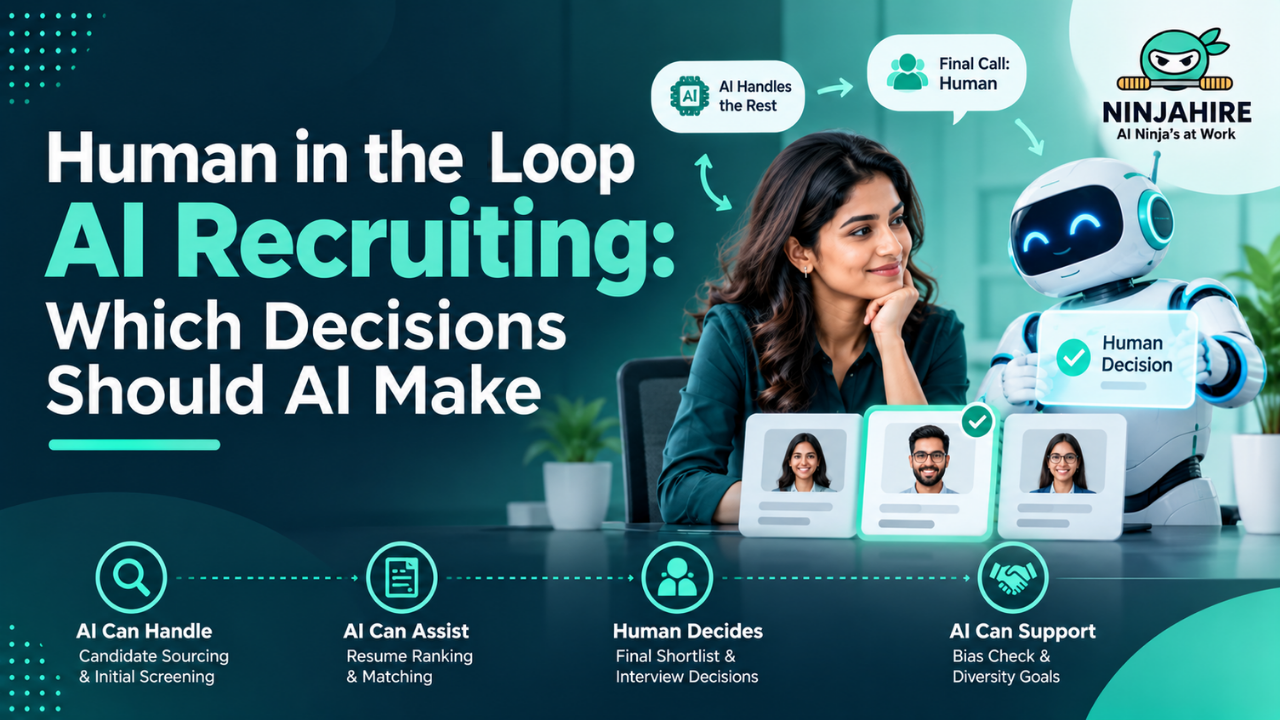
Can AI Recruiting Software Replace Recruiters?
AI recruiting software is better positioned as a recruiter productivity layer than a complete replacement for recruiters.
AI is well suited to:
- Searching
- Matching
- Outreach
- First-round screening
- Interview scheduling
- Candidate ranking
- Workflow administration
Recruiters remain essential for:
- Candidate relationships
- Hiring-manager consultation
- Complex candidate evaluation
- Negotiation
- Exception handling
- Employer representation
- Final hiring decisions
LinkedIn's research similarly emphasizes that as AI automates routine work, human skills such as relationship development become increasingly important in recruiting.
The strongest operating model is therefore:
AI handles volume. Recruiters handle judgment and relationships.
How to Choose the Right AI Recruiting Software
Before purchasing, use a simple evaluation framework.
| Evaluation Area | Key Question |
|---|---|
| Sourcing | Can it find candidates across the sources the team actually uses? |
| Matching | Can it understand skills and experience beyond exact keywords? |
| Outreach | Can it personalize and automate candidate engagement? |
| Screening | Can it conduct structured first-round assessments? |
| Interviewing | Does it support the required interview formats? |
| Workflow | Can the system automate multiple recruiting stages? |
| Integration | Does it connect with the ATS and VMS? |
| Customization | Can teams configure rubrics and workflows? |
| Scalability | Can it handle the organization's candidate volume? |
| Human oversight | Can recruiters review and intervene when needed? |
| Reporting | Can leaders measure recruiting performance? |
| Candidate experience | Is the automated process clear and accessible? |
A platform should be evaluated against the actual recruiting workflow rather than the number of AI features listed on its product page.
Where Does Ninjahire Fit?
It sets itself apart from the competition with its unique capability of bringing candidate sourcing, multi-channel outreach, and AI screening into a single recruiting process, instead of having them as distinct operations.
This feature is especially important for staffing agencies, MSP solutions, and RPO providers because it caters to their diverse clients' needs and helps deal with large numbers of candidates. Using rediscovery of candidates from existing ATS and CRM databases, its Ninjagraph talent graph, and external job sites, Ninjahire seeks to assist recruiters in finding suitable candidates through multiple channels of sourcing.
The other important feature is the configurability of recruiting workflows. With this option, teams can adjust screening criteria, scoring systems, outreach flow, and interviewing process according to specific positions and clients.
When it comes to choosing AI recruitment tools for organizations, the main point lies in how all these functions interact together: identifying suitable candidates, interacting with them through different means of communication, selecting candidates according to job-related requirements, and transferring the results in an organized form.
The core value of Ninjahire is workflow continuity: minimizing the amount of manual intervention in the process of recruiting so that recruiters could focus on analyzing candidates and communicating with them.
Conclusion
AI recruiting tools integrate the entire recruiting process, including sourcing, outreach, screening, and interviewing, and streamline the whole thing. The appropriate tool will automate the repetitive processes but will keep the recruiters in control of making hiring decisions.
When looking for AI recruiting software for staff, the main concern should be finding an option that aligns with the current workflows of the organization, its ATS/VMS, and its recruiting demands.
Learn about the AI recruiting platform of Ninjahire and find out how AI recruiting workflows can help your team spend more time with quality candidates and fewer with repetitive tasks.