
Software category names in talent acquisition can be confusing. Vendor websites often describe point tools, messaging workflows, sourcing databases, and core relational systems with overlapping terminology. When talent leaders ask whether an AI recruiter replaces an ATS, the question is usually driven by practical frustrations: candidate pipelines stall between interview stages, resumes sit unread in large databases, or recruiters spend too much time on administrative coordination.
Replacing an incumbent ATS is an expensive, high-friction project that requires operational downtime, database migrations, and administrative retraining. Layering an AI tool over an unsuitable system of record introduces integration failures, duplicate profiles, and compliance exposure. Deciding whether you need an ATS, an AI recruiting platform, or both requires a clear look at how data records differ from workflow execution.
What Is an ATS?
An Applicant Tracking System is the organizational database of record for an enterprise hiring process. Its core architectural job is to document what happened, when it occurred, who took part, and why an employment decision was made.
When an internal team opens a new job, the ATS logs the formal job description, sets approval chains, tracks wage bands, and monitors candidate stage movement from application to final offer letter. The primary responsibilities of an ATS include:
- Requisition and job lifecycle management: Enforcing internal approvals, budget limits, job board distribution, and compliant hiring manager sign-offs.
- Application capture and candidate profiles: Storing candidate resumes, portfolio links, contact data, and demographic disclosures.
- Compliance and audit logs: Maintaining records required for federal, state, and international employment reporting, including EEOC compliance, affirmative action planning, and consent logging.
- Scorecards and structured feedback: Collecting evaluation notes from interview loops to ensure consistent, defensible hiring standards.
- Offer generation and onboarding transitions: Processing official offers, counteroffers, background checks, and downstream hand-offs to Human Resource Information Systems (HRIS).
Modern ATS platforms, including Greenhouse, Ashby, and Lever, have added workflow automations, self-scheduling links, and native machine learning features. However, their primary engineering priority remains system reliability, compliance traceability, and record integrity. An ATS is not designed to browse the web autonomously to find specialized talent, initiate adaptive outbound recruitment campaigns, or hold conversational voice phone interviews with hundreds of applicants at midnight.
What Is an Autonomous AI Recruiter?
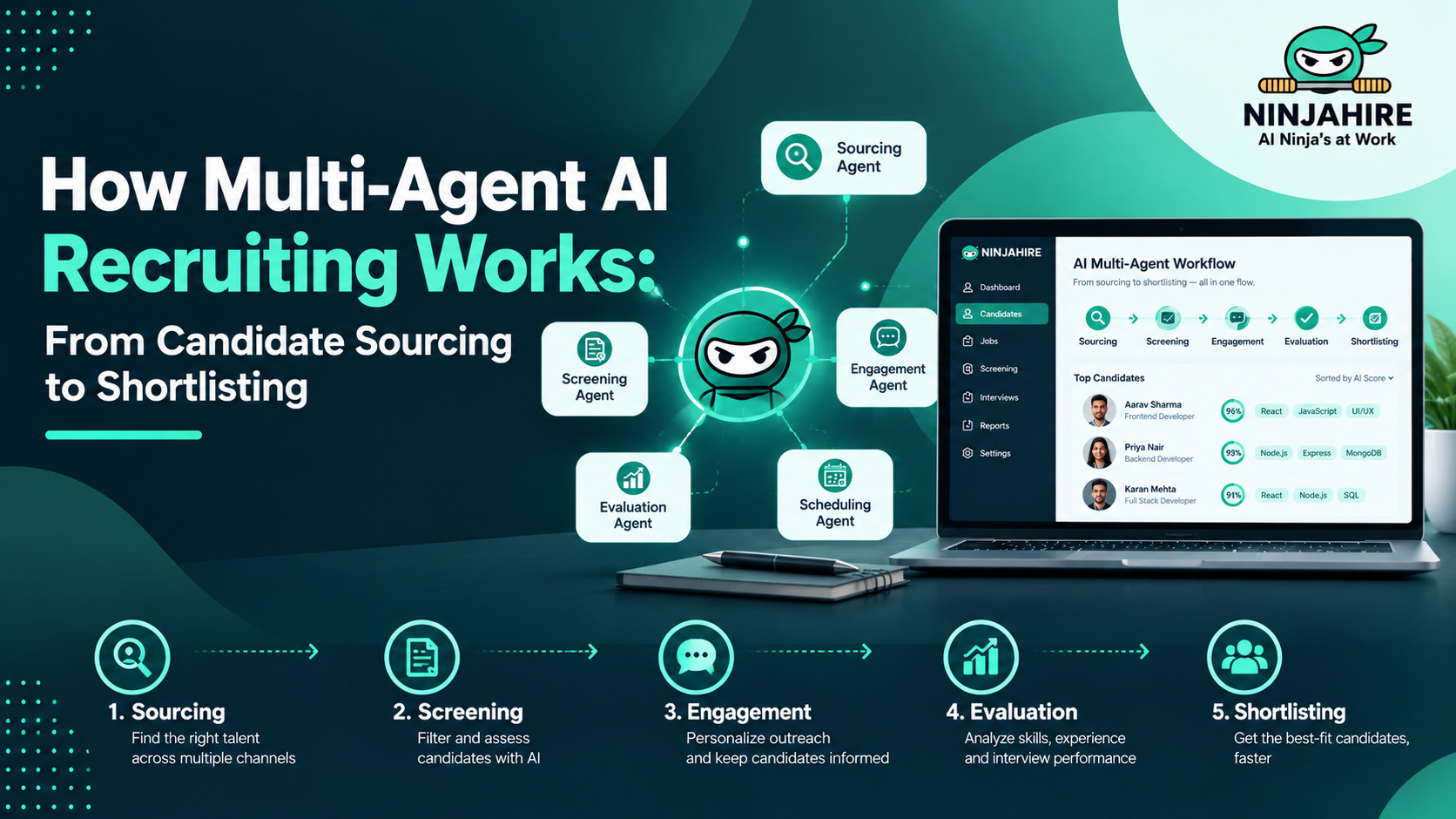
An autonomous AI recruiter is software designed to plan, coordinate, and execute multi-stage recruiting activities toward a specified objective with minimal continuous human prompting, operating within defined permissions and guardrails.
This category differs from conventional automation in how it handles context. Traditional workflow automation relies on fixed if-then rules, such as sending template email B when a candidate is moved to stage 2. If a candidate replies with an unexpected question or asks to reschedule across time zones, rule-based automation stops. An agentic system uses natural language processing to interpret context, select the appropriate next action, and adapt its approach within pre-approved parameters.
In practice, autonomous recruiting platforms typically focus on three execution bottlenecks:
- Sourcing and candidate rediscovery: Searching external talent networks and indexing internal ATS archives to surface qualified profiles for open requisitions.
- Adaptive multichannel outreach: Contacting candidates via email, SMS, or messaging apps, answering logistical questions about job parameters, and interpreting candidate intent.
- Structured pre-screening: Conducting conversational voice or web-based screening calls to verify basic qualifications, schedule constraints, and compensation expectations against an approved role rubric.
Capabilities vary significantly by vendor. Some tools focus strictly on automated voice screening, while others handle outbound discovery and calendar coordination. Autonomous AI recruiters do not operate in a vacuum. To be effective, they require structured access to job parameters, clear permission boundaries, and direct hand-offs to human recruiters.
AI Recruiting Platform vs. ATS: Four-Category Comparison
To design an effective hiring stack, talent acquisition leaders must separate tools by their primary functional purpose. The table below compares the four common categories across operational dimensions.
| Dimension | Applicant Tracking System (ATS) | Recruiting CRM | Sourcing Tool | Autonomous AI Recruiter |
|---|---|---|---|---|
| Primary Purpose | Authoritative system of record for active hiring pipelines, compliance, and candidate disposition. | Relationship management and long-term engagement with passive talent communities and previous applicants. | Discovery, aggregation, and filtering of candidate profiles from external platforms and databases. | Execution-oriented system of action that plans and performs multi-step recruiting tasks autonomously. |
| Main Operational Focus | Process compliance, interview feedback, workflow integrity, and administrative hiring governance. | Audience segmentation, email nurture campaigns, talent pipelines, and employer branding. | Boolean search, profile scraping, semantic skill matching, and contact data enrichment. | |
| Typical Starting Point | An approved requisition and an active job application or formal recruiter upload. | A prospect profile added from an event, landing page, past silver medalist pool, or outbound search. | A set of required job skills, location criteria, target companies, or seniority parameters. | A verified job requisition brief requiring candidate discovery, outreach, or initial screening. |
| Typical Actions Performed | Logging stages, collecting interview scorecards, advancing candidates, and issuing offer letters. | Scheduling nurture emails, tracking event attendance, segmenting talent pools, and monitoring engagement. | Generating candidate lists, finding verified email addresses, and exporting profiles to an ATS or CRM. | Executing multichannel outreach, answering candidate questions, running phone screens, and booking interviews. |
| Main Records Handled | Official applications, EEO/OFCCP compliance data, candidate disposition reasons, and offer records. | Prospect contact info, email open rates, interest tags, and communication history. | Public professional profiles, scraped resume histories, and contact waterfall data. | Conversational transcripts, objective rubric scores, voice interview audio, and activity logs. |
| What It Does Not Replace | Does not replace active outbound talent discovery or conversational candidate evaluation. | Does not replace formal ATS compliance logging, requisitions, or structured panel feedback. | Does not replace candidate relationship management, applicant screening, or pipeline tracking. | Does not replace the authoritative ATS compliance record or human hiring decisions. |
| Best-Fit Use Case | Every organization requiring a formal, auditable hiring workflow and compliance framework. | Companies with strong employer brands cultivating passive candidate pipelines for recurring roles. | Teams hiring hard-to-find technical talent or specialized roles with few inbound applicants. | High-volume recruiting, commercial staffing, or teams with severe initial screening bottlenecks. |
These categories describe operational roles, not rigid boundaries. A modern ATS may include basic CRM features. A sourcing platform might include automated email sequences. The key is understanding which system owns your authoritative hiring records and which systems carry out specific workflow steps.
Records vs. Workflow Actions
The clearest way to evaluate whether you need a new tool is to separate records from workflow actions. These concepts answer fundamentally different operational questions:
- Records answer: What do we know, who gave consent, what happened, and why was this candidate hired or rejected?
- Workflow actions answer: What specific task needs to happen next to move a qualified candidate forward?
An ATS is built to store records. It maintains candidate files, preserves historical interview feedback, and logs regulatory data. However, storing records does not move a candidate through the pipeline. When a hiring team relies entirely on an ATS, human recruiters must execute every action manually: drafting emails, copying phone numbers, conducting repetitive phone screens, checking calendars, and manually logging notes.
An autonomous AI recruiter is designed to perform actions. It reads requisition data from the system of record, takes authorized steps in external channels, and returns the results for human evaluation. Crucially, executing an action does not make an AI tool the owner of the record.
Illustrative Workflow: How Records and Actions Interact
- Record created (ATS): The hiring manager opens a Senior Site Reliability Engineer requisition with approved salary bands and criteria.
- Action executed (Sourcing): An AI agent searches external platforms and internal archives to identify 60 candidate profiles matching the rubric.
- Action executed (Outreach): The system verifies contact information against suppression lists and sends personalized outreach explaining the role.
- Action executed (Screening): Interested candidates complete an automated phone screen that verifies shift availability and practical Kubernetes experience.
- Human review gate: A human recruiter reviews the scored dossiers, reads the conversational transcripts, and approves three finalists.
- Record updated (ATS): The system writes transcripts, objective rubric scores, and candidate stage markers directly back to the ATS candidate profile.
In this workflow, the AI platform accelerates execution, but the ATS remains the authoritative source of truth. If the external tool were disconnected tomorrow, the complete history of candidate applications, interview notes, and stage markers would remain safely stored in the core ATS database.
Data Ownership: Which System Should Be the Source of Truth?
When multiple systems handle candidate data, operational confusion quickly follows unless your team establishes strict data ownership rules. Without explicit boundaries, systems overwrite candidate statuses, recruiters send contradictory emails, and compliance audits become difficult to reconcile.
For each piece of recruiting information, talent teams should define which platform has authoritative write permissions and what secondary systems are allowed to modify.
| Data or Activity | Ownership Question | What to Verify Before Deployment |
|---|---|---|
| Requisitions and Job Criteria | Which platform defines the official, approved job qualifications and salary bands? | Verify that the AI platform reads approved job criteria directly from the ATS via API rather than relying on unapproved external text. |
| Candidate Contact Records | If an enrichment tool discovers a new email or phone number, does it overwrite existing ATS data? | Ensure third-party enrichment data populates secondary contact fields rather than overwriting historical, candidate-provided details. |
| Pipeline Stage and Status | Can an external AI tool change a candidate official application stage in the core pipeline? | Confirm bidirectional status mapping. An AI tool should propose or advance a stage only when explicit rubric criteria are satisfied. |
| Candidate Communication History | Where are candidate email replies, text messages, and call recordings archived? | Ensure all external messages, transcripts, and audio links log directly to the central candidate record in the ATS for audit visibility. |
| Screening Scores and Notes | How are AI-generated evaluation summaries stored and reviewed by hiring managers? | Verify that rubric scores and transcripts write back to structured ATS fields or notes, allowing hiring managers to inspect the evidence. |
| Opt-Outs and Suppression Lists | When a candidate texts STOP or asks to be removed, which system enforces the rule? | Confirm that opt-outs synchronize across all connected systems immediately to prevent unlawful re-engagement under privacy laws. |
In enterprise architectures, the ATS should almost always serve as the primary source of truth for candidate status, compliance logs, and final disposition. Sourcing and engagement tools should act as contributors, feeding verified information back into the primary database. For a technical analysis of how to configure these connections without disrupting existing workflows, read our guide on how to add AI recruiting to an existing ATS.
When Is an ATS Alone Sufficient?
Despite marketing claims that every company must adopt autonomous AI agents, many talent acquisition teams operate effectively using an ATS alone. Adding specialized software introduces licensing costs, integration maintenance, and administrative complexity.
An ATS alone is generally sufficient when your organization experiences the following conditions:
- Inbound candidate supply is balanced: Open job postings attract a manageable volume of qualified candidates, making automated external sourcing unnecessary.
- Hiring velocity is predictable: Recruiters have sufficient bandwidth to review applicants, conduct initial phone screens, and gather hiring manager feedback without creating long delays.
- Built-in automation covers routine tasks: The current ATS already provides functional self-scheduling links, auto-response emails, and standard questionnaire forms.
- Roles are highly relationship-driven: Executive search, partner-track hiring, and leadership roles require high-touch human persuasion from the very first contact.
- Integration and compliance overhead outweighs value: The operational cost of managing third-party connectors, auditing algorithmic tools, and training recruiters exceeds the hours saved.
A practical decision rule for recruitment operations is straightforward: do not purchase an AI recruiting platform to solve a general sense of inefficiency. Identify a specific, recurring operational bottleneck. If your hiring process is not constrained by sourcing volume, delayed outreach, or phone screening capacity, an ATS alone is likely your best setup.
When Can Autonomous AI Recruiters Help?
Autonomous AI recruiting platforms deliver real return on investment when an organization faces clear workflow constraints that cannot be resolved by hiring more administrative coordinators. These bottlenecks typically involve high candidate volume, severe calendar friction, or highly competitive hiring timelines.
Common scenarios where an autonomous AI recruiter provides measurable value include:
- Time-sensitive candidate rediscovery: Scanning thousands of past applicants and silver medalists already stored in an ATS to build an immediate shortlist before opening expensive external job postings. Explore practical strategies in our guide to candidate rediscovery in your ATS.
- High-volume pre-screening: Roles in logistics, customer operations, retail, and manufacturing often generate hundreds of applications per week. An AI voice screening agent can contact qualified applicants within minutes, verify shift requirements, and deliver standardized summaries.
- Compressing speed-to-submit: In commercial staffing and contingent recruitment, submitting qualified talent ahead of competitor agencies determines placement success. Autonomous outreach and screening agents can compress a three-day qualification process into a few hours.
- Eliminating scheduling bottlenecks: Automated agents can coordinate interviews, manage rescheduling requests across multi-interviewer hiring panels, and update calendar holds automatically.
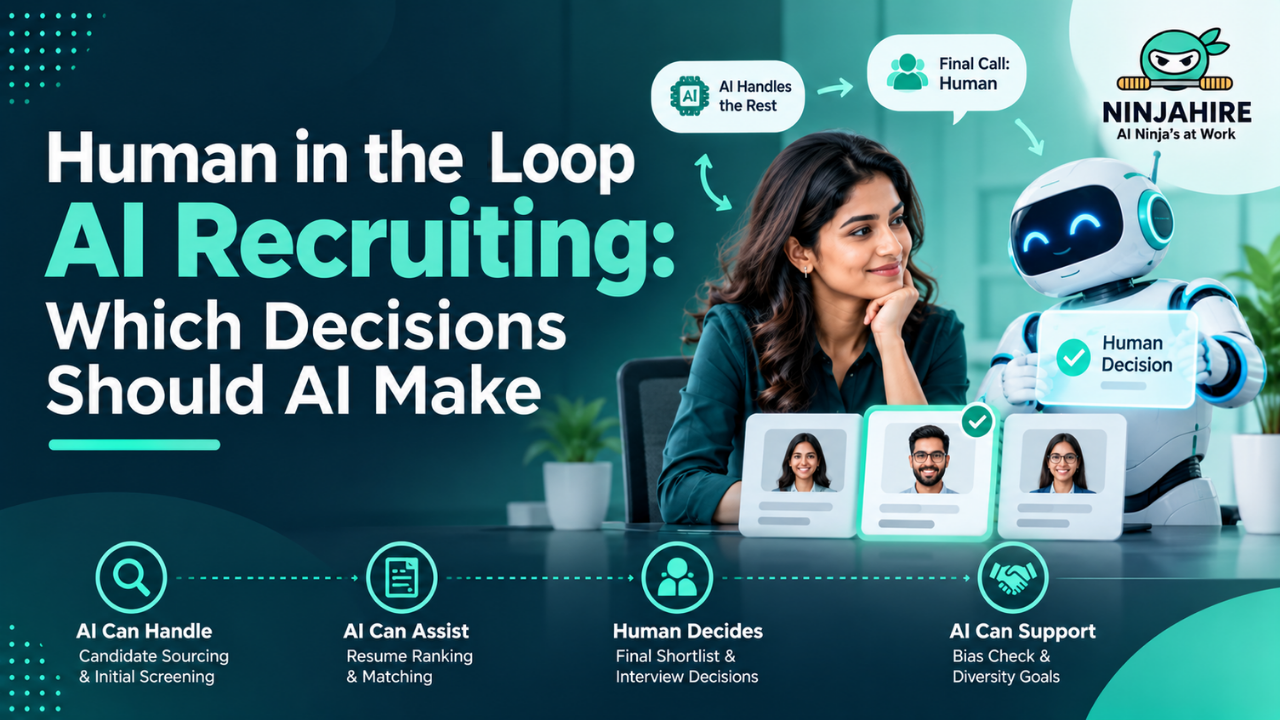
When deploying autonomous capabilities, organizations must separate administrative automation from consequential employment decisions. Routine administrative tasks, such as gathering availability, checking certifications, and answering logistical questions, can be safely automated under rule-based parameters.
However, evaluative actions that influence candidate advancement require careful governance. In the United States, the Equal Employment Opportunity Commission (EEOC) technical guidance clarifies that employers remain responsible under Title VII for adverse impact created by algorithmic assessment tools. Similarly, the NIST AI Risk Management Framework emphasizes the necessity of human-in-the-loop oversight, transparent scoring criteria, and active monitoring for proxy discrimination. Autonomous agents should assist recruiters by collecting evidence, not by making unilateral hiring or rejection decisions.
Functionality Overlap and Total Cost of Ownership
Comparing recruitment software purely by vendor category labels is unreliable. Modern enterprise platforms frequently duplicate features. An ATS may include basic email sequencing. A CRM may offer outbound sourcing tools. A sourcing platform might include an automated email engine.
Before purchasing new software, talent acquisition leaders must evaluate functionality overlap to avoid paying twice for the same capability. A disciplined software evaluation uses a total cost of ownership (TCO) calculation rather than looking at license fees in isolation:
To determine whether adding an autonomous AI platform makes economic sense, use this practical evaluation checklist:
- Feature audit: Does your current ATS tier already include candidate rediscovery, self-scheduling, or automated messaging that simply has not been configured?
- Integration complexity: Does the third-party tool connect via pre-built direct connectors, or will it require paid custom API development and middleware subscriptions?
- Maintenance and data stewardship: Who on your internal team will be responsible for resolving webhook errors, managing field mapping changes, and auditing duplicate profiles?
- User interface friction: Will your recruiters have to work out of another software interface every day, or does the tool write all notes and data back to the primary ATS?
- Vendor lock-in and data portability: If you decide to cancel the software in two years, can you export all conversation logs, transcripts, and enriched contact data cleanly?
Evaluate total cost against concrete operational metrics. Measure baseline numbers before signing a contract: recruiter hours spent per qualified submission, average time to shortlist, candidate outreach response rates, and cost per hire. A new platform should demonstrate measurable improvement against these metrics within 60 to 90 days.
How to Introduce AI Recruiting in Phases
Successful talent acquisition teams rarely deploy autonomous recruiting tools across their entire organization at once. A phased rollout allows you to test integration stability, verify data accuracy, and train recruiters without risking operational disruptions.
A Practical Four-Phase Adoption Framework
- Phase 1: Audit your existing stack: Map your current ATS, sourcing subscriptions, and messaging tools. Identify where candidate data lives and pinpoint your primary operational bottleneck: is it top-of-funnel sourcing, slow candidate follow-up, or high interview drop-off?
- Phase 2: Target one specific workflow: Select a single, measurable problem to solve. For example, test candidate rediscovery across your existing database for one high-volume role family, or automate initial phone screening for technical contractors.
- Phase 3: Run a controlled pilot: Deploy the software across a small pilot group of recruiters. Verify bidirectional ATS write-back, review call transcripts for scoring consistency, audit candidate feedback, and confirm opt-out compliance.
- Phase 4: Evaluate data before expanding: Measure pipeline velocity and recruiter adoption against your pre-pilot baseline. Expand deployment across additional job families only after data integrity and user adoption are confirmed.
Frequently Asked Questions
What is the difference between an AI recruiter and an ATS?
Do autonomous AI recruiters replace ATS software?
Can an ATS already have AI features?
What is the difference between a recruiting CRM and an ATS?
Is an AI sourcing tool the same as an AI recruiter?
When is an ATS alone enough?
What should you check before connecting an AI recruiter to an ATS?
How do you measure whether an AI recruiter is worth the cost?
Conclusion: Designing an Outcome-Focused Recruiting Stack
Selecting recruitment technology is not about adopting every emerging tool or replacing functioning infrastructure. An effective hiring architecture is built on functional clarity: maintaining your ATS as an auditable, compliant system of record while deploying specialized execution tools to eliminate proven operational bottlenecks.
Before investing in new software, evaluate your hiring process honestly. Map where candidates spend idle time waiting for manual steps, audit the features already available in your current systems, and establish strict data ownership rules. When software serves a defined workflow need, hiring teams move faster, data remains secure, and recruiters spend their time closing top talent rather than managing administrative tasks.
Evaluate Your Recruiting Execution Architecture
Discover how NinjaHire functions alongside your existing ATS to automate candidate discovery, multichannel outreach, and 24/7 conversational screening without replacing your system of record.
Explore NinjaHire AI Solutions