Autonomous Recruiting for Staffing Agencies: How It Works

October 30, 2026

Ninjahire Research | AI Recruiting for Staffing Agencies
Autonomous Recruiting for Staffing Agencies: How AI Agents Automate the Recruitment Workflow
Understand how AI recruiting agents connect job intake, ATS rediscovery, external sourcing, candidate outreach and screening, while keeping recruiters in control of qualification and submission decisions.
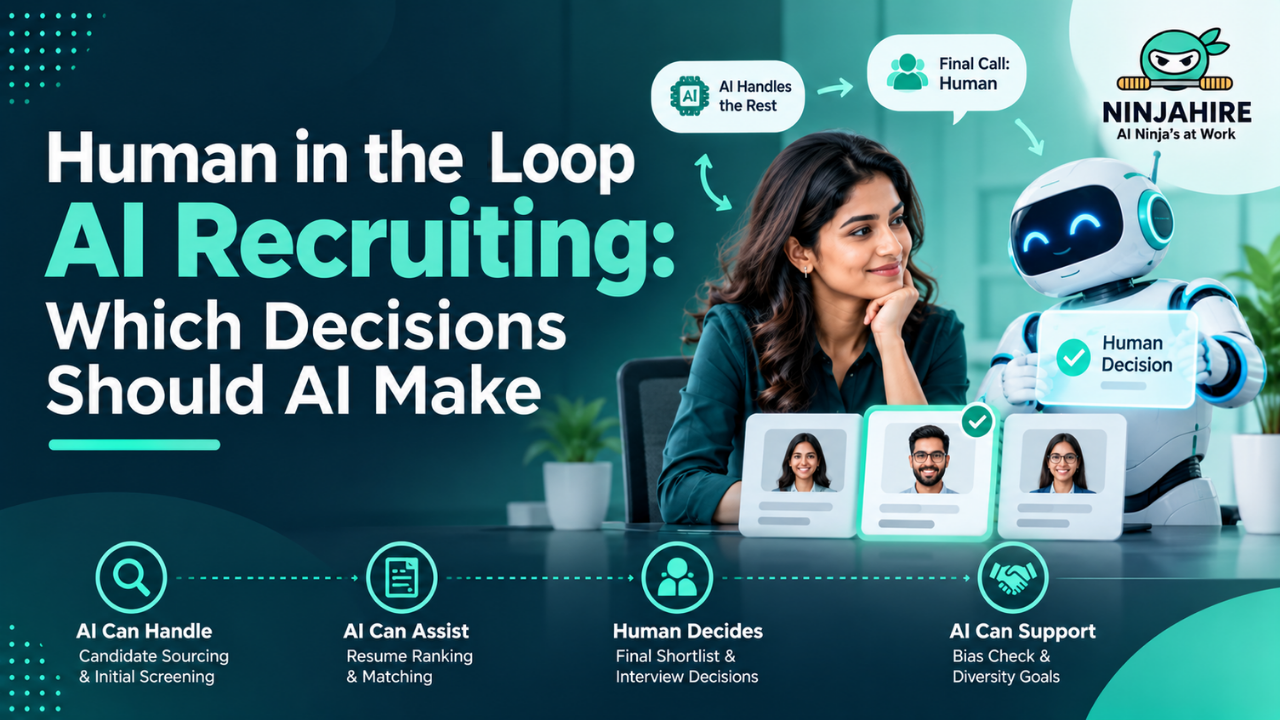
Autonomous recruiting for staffing agencies uses AI agents to coordinate approved recruitment tasks across job intake, candidate rediscovery, sourcing, outreach and screening. Instead of requiring a recruiter to initiate every repetitive step, an agent can execute defined tasks, maintain workflow context and return evidence for human review. Recruiters remain responsible for role interpretation, candidate relationships, exceptions and final hiring or submission decisions.
For staffing firms, the distinction matters because recruiters often manage several client requisitions, candidate pipelines and submission deadlines at the same time. A useful autonomous recruiting workflow connects these activities instead of automating one isolated task and leaving recruiters to manage every handoff manually.
This guide explains how autonomous recruiting works in staffing agencies, how it differs from traditional ATS and AI-assisted tools, which capabilities to evaluate, and how to introduce the technology with measurable controls.
What Is Autonomous Recruiting for Staffing Agencies?
Autonomous recruiting is a recruiting operating model in which AI agents carry out connected, predefined tasks with limited manual prompting. In a staffing agency, those tasks can include structuring a job order, searching approved candidate sources, identifying potential matches, sending authorised outreach, conducting structured first-round screening and preparing a recruiter-reviewed shortlist.
An AI recruiting agent is more than a chatbot that answers recruiter questions. It receives a goal, works within configured instructions and data permissions, performs one or more tasks, and returns an output that can be checked. The level of autonomy depends on the platform, integration, workflow configuration and approval rules.
In practical terms: autonomous recruiting helps move a candidate from an approved requisition to a reviewed shortlist through connected sourcing, engagement and screening steps. It does not mean delegating every hiring decision to software.
For a product-level view of how these capabilities can be coordinated, see Ninjahire's AI recruiting agents, which combine sourcing, outreach and screening workflows for staffing teams.
Manual Recruiting vs AI-Assisted vs Autonomous Recruiting
These terms are often used interchangeably, but they describe different operating models. The useful question for a buyer is not whether a product uses AI. It is which tasks it performs, what triggers those tasks, how it handles exceptions and where a person must approve the next action.
| Capability | Traditional recruiting or ATS | AI-assisted recruiting | Autonomous recruiting |
|---|---|---|---|
| Job intake | Recruiter enters and interprets requirements. | AI extracts or summarises job details for review. | Agent structures approved requirements and routes conflicts for clarification. |
| Candidate sourcing | Recruiter searches databases and job boards. | AI suggests search terms or ranks results. | Agent executes approved searches across connected sources and returns traceable results. |
| Candidate matching | Keywords, filters and recruiter judgement. | AI ranks profiles against role criteria. | Agent applies configured criteria, surfaces evidence and flags uncertain matches. |
| Outreach | Manual messages or scheduled templates. | AI drafts or personalises messages. | Agent runs approved sequences, records responses and stops or escalates when required. |
| Screening | Recruiter conducts first-round calls. | AI summarises answers or assists evaluation. | Agent conducts structured screening within an approved rubric and routes exceptions to a recruiter. |
| Submission | Recruiter assembles and sends the candidate packet. | AI helps prepare summaries and documents. | Agent prepares the packet and workflow record; recruiter approval remains the release gate unless a validated process explicitly allows otherwise. |
This is a conceptual comparison, not a universal description of every ATS or recruiting product. Some ATS platforms include advanced automation, and some AI products perform only one task. Buyers should test the actual workflow rather than rely on category labels.
How Autonomous Recruiting Works: From Job Order to Candidate Submission
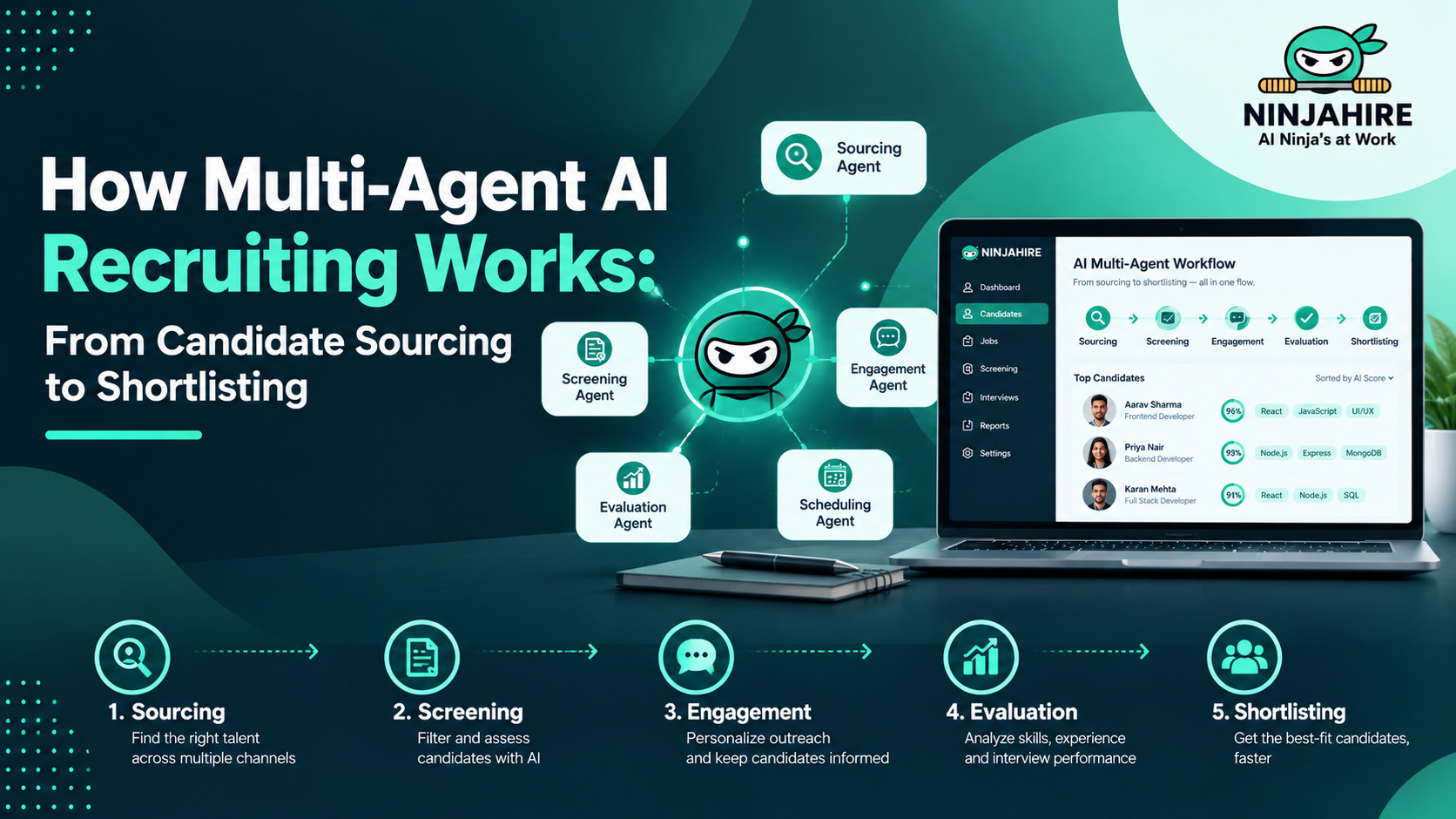
A practical autonomous recruiting workflow for staffing agencies connects six stages. Each stage should have a defined input, output, exception path and approval rule. The model below is an implementation blueprint. It should not be read as a claim that every vendor automates every step out of the box.
1. Structure and validate the job order
The workflow begins with a client requisition or job order. The system extracts role title, required skills, preferred skills, experience, certifications, location, work arrangement, contract duration, pay or bill-rate constraints and submission requirements.
The agent can organise the information into a structured brief, identify missing fields and highlight conflicting requirements. For example, if a certification is marked both mandatory and preferred, the system should ask for clarification rather than silently choose one interpretation.
Recruiter checkpoint: approve the role criteria, resolve ambiguity and review client instructions for discriminatory requirements before sourcing begins.
Output: an approved requisition that becomes the reference for matching, outreach and screening.
2. Rediscover candidates already in the ATS or CRM
Before expanding the search, check whether the agency already has suitable applicants, previous prospects, silver medalists, placed candidates or contractors with relevant experience. ATS candidate rediscovery compares existing records with the new role and surfaces profiles for recruiter review.
Historical suitability is not current qualification. A candidate who matched a role last year may have changed location, availability, skills or rate expectations. Prior interactions and process outcomes provide context, but current interest and eligibility still need to be confirmed.
Ninjahire describes this as the first layer of its AI candidate sourcing workflow, which searches connected ATS or CRM records before expanding to additional talent sources. Access depends on the ATS connection, available fields and account configuration.
Recruiter checkpoint: review previous interactions, confirm that the record can be used for the proposed purpose, and decide whether the candidate should be re-engaged.
Output: a rediscovered candidate list with historical context and information that needs revalidation.
3. Source externally to fill the remaining gaps
If the existing database does not provide enough qualified candidates, the workflow can expand to approved external sources. Depending on the platform and subscription, these may include professional profile databases, job boards and other permitted talent sources.
The agent can apply role criteria, search across connected sources, identify potential duplicates and attach source information to each result. It should not broaden requirements, access restricted sources or increase sourcing spend without the permissions configured by the agency.
For example, Ninjahire describes a sourcing model that combines ATS or CRM rediscovery, its Ninjagraph talent graph and supported job boards. Buyers should confirm which sources and data fields are included in their own plan and integration setup.
Recruiter checkpoint: approve sources, search boundaries, budget limits and material changes to the role criteria.
Output: a deduplicated prospect pool with source provenance and available profile information.
4. Run candidate outreach and manage responses
Once a prospect is approved for contact, an outreach agent can send role-relevant messages through configured channels such as email, SMS or phone. The workflow should record the message, time, channel, response and suppression status so recruiters can see the complete interaction history.
Responses should be classified carefully. Interested, declined, opted out, unreachable and unresolved are different states and should not be merged into one generic response category. Negotiations, complaints, questions requiring judgement and ambiguous replies should be handed to a recruiter.
Recruiter checkpoint: approve templates, channel permissions, timing and escalation rules. Confirm that suppression and withdrawal requests stop further contact.
Output: an outreach history with candidate responses and clear next actions.
5. Screen and qualify candidates against an agreed rubric
An AI screening agent can conduct structured first-round questions by phone, video or web, depending on the product. Questions should reflect the approved job requirements and use a consistent rubric. The resulting record should distinguish confirmed answers, missing information, candidate statements and items that need recruiter verification.
For contract staffing, relevant questions may include availability, location, work arrangement, contract duration, rate expectations and required certifications. The system should not infer an answer when a candidate has not provided one. Potential disqualifiers should be visible for review rather than silently converted into an automatic rejection.
Ninjahire's AI screening agent page describes structured phone, video and web screening with scoring and recruiter review. Buyers should validate the interview formats, rubric controls, transcript access and integration behaviour available in their deployment.
Recruiter checkpoint: review evidence, missing answers, accommodation requests and flagged responses before advancing a candidate.
Output: a structured screening summary with supporting answers and unresolved questions.
6. Prepare the shortlist and approve submission
The final workflow stage brings together the resume, sourcing history, outreach responses, screening evidence, rate, availability and unresolved caveats. A recruiter checks candidate fit, confirms candidate authorisation and approves the submission to the client or VMS.
Where an integration supports write-back, test whether the submission status, notes and supporting records are written to the correct ATS or VMS record. A prepared packet is not proof that a submission has been transmitted or recorded successfully.
Recruiter checkpoint: approve client fit, candidate authorisation, commercial details and final transmission.
Output: a recruiter-approved submission packet and a verified system record.
Why Autonomous Recruiting Matters for Staffing Agencies
Staffing agencies manage a different operating environment from many in-house talent acquisition teams. Recruiters may work across multiple client accounts, contract and permanent roles, changing priorities, tight submission windows and large candidate databases. Autonomous recruiting can help coordinate repetitive work across these parallel pipelines, provided the workflows are configured for each client's requirements.
Manage multiple client requisitions without losing workflow context
Each client may have different job criteria, screening questions, rate limits, communication preferences and submission rules. A useful platform keeps these settings separate while giving managers visibility across the delivery desk. Buyers should test whether templates, rubrics, permissions and candidate records remain correctly associated with the relevant client and requisition.
Reuse existing candidate relationships
Agencies often have years of applicants, prospects and placed contractors in their ATS or CRM. A deliberate rediscovery step can make those records easier to reconsider when a similar requirement arrives. In one Ninjahire-published case study, candidate reuse increased by 65% after rediscovery became a standard early step in the workflow. The case study does not report the metric denominator or establish a corresponding improvement in time-to-fill, placement rate or cost, so those outcomes should not be inferred. See the ATS candidate reuse case study for the reported result and its measurement limitations.
Reduce repetitive sourcing and follow-up work
Recruiters can spend substantial time rebuilding searches, sending routine follow-ups and collecting the same first-round information. Automation can handle approved, repeatable tasks and give recruiters a clearer record of what happened. The benefit should be measured through recruiter time, accepted shortlist quality and downstream conversion, not simply the number of messages or profiles processed.
Support contract staffing and candidate redeployment
When contractors complete assignments or become available for new work, their previous experience and placement history may be relevant to another client requirement. A rediscovery and re-engagement process can help the agency identify these relationships, then confirm current availability, rate, location and interest. Previous placement is useful context, not a guarantee of suitability for a new role.
Improve submission readiness
A candidate profile is not necessarily ready for client submission. Staffing teams may need verified availability, rate alignment, certifications, screening answers, candidate consent and client-specific documentation. A connected workflow can assemble these details and expose missing information before a recruiter approves the packet.
Autonomous Recruiting Software vs Traditional ATS and AI Recruiting Tools
An ATS is generally the system of record for applicants, requisitions and recruitment activity. AI recruiting tools may add sourcing, matching, outreach or screening capabilities. Autonomous recruiting software aims to connect several of these tasks through agents and workflow rules. These categories can overlap, so buyers should compare the actual coverage and integration depth.
| Software category | Typical role in the workflow | What to verify |
|---|---|---|
| Traditional ATS | Stores candidate records, requisitions, stages and recruiter activity. | Searchable data, permissions, reporting, integrations and workflow automation. |
| Candidate sourcing tool | Finds potential candidates from internal or external talent sources. | Source coverage, search method, contact data, duplicate handling and ATS sync. |
| Outreach automation | Manages candidate messages and follow-up sequences. | Channel support, consent records, suppression, personalisation and reply handling. |
| AI screening tool | Collects structured candidate answers and creates evaluation summaries. | Rubric control, evidence visibility, accessibility, transcript access and human review. |
| Autonomous recruiting platform | Coordinates several recruiting tasks through agents and connected workflows. | Which stages are genuinely executed, what triggers each action, integration depth and approval controls. |
When comparing platforms, do not assume that a product described as agentic or autonomous handles every stage from job intake to submission. Request a live demonstration of the exact workflow your agency needs, including exception handling and failed integrations.
For a broader look at how recruitment platforms connect different operational stages, use this recruitment workflow automation software comparison as a starting point, then verify current capabilities directly with each vendor.
Features to Look for in Autonomous Recruiting Software
The best autonomous recruiting software for a staffing agency is not necessarily the product with the longest feature list. Prioritise the capabilities that match your delivery model, candidate data, client requirements and systems of record.
| Capability | Why it matters | Buyer validation question |
|---|---|---|
| Job intake and parsing | Converts unstructured job orders into usable role criteria. | Can recruiters correct extracted fields and resolve conflicting requirements? |
| ATS and CRM integration | Allows the workflow to use existing candidate records. | Which fields, attachments and historical interactions can it read or update? |
| Candidate rediscovery | Surfaces previous applicants, prospects and contractors for new roles. | Can it show why a historical profile matched and when its details were last updated? |
| Multi-source sourcing | Expands the pool when internal records do not meet the requirement. | Which sources are included, permitted and available in the proposed plan? |
| Candidate matching | Prioritises profiles against required and preferred criteria. | Can recruiters inspect evidence and challenge a match score? |
| Multichannel outreach | Coordinates approved contact through supported channels. | Are consent, suppression, opt-out and response states recorded? |
| AI screening | Collects consistent first-round information at scale. | Can the agency customise rubrics, review transcripts and handle missing answers? |
| Human approval controls | Keeps consequential decisions and exceptions reviewable. | Can the system pause, escalate and record who approved an action? |
| Reporting and audit history | Shows whether automation improves the delivery process. | Can the agency report on quality, time, exceptions and outcomes by client? |
| Security and governance | Protects candidate information and limits unauthorised actions. | What access controls, retention settings, audit logs and data-processing terms are available? |
Compliance, Data Security and Human Oversight in AI Recruiting
Autonomous recruiting does not remove an agency's responsibilities for candidate data, fair employment practices or communication rules. Compliance should be built into each workflow stage, with separate controls for data access, outreach, screening and submission.
Review job requirements before sourcing
Employment agencies should not follow discriminatory client preferences or use prohibited protected-class criteria when making referrals. Review client instructions before they become sourcing filters or screening rules. The US Equal Employment Opportunity Commission guidance for employment agencies explains these responsibilities.
Control candidate data use and retention
Before searching or reusing historical records, confirm that the agency has an appropriate basis to use the information for the intended purpose. Review retention rules, candidate notices, access restrictions and deletion or suppression requests. Requirements vary by jurisdiction, candidate location, data type and communication channel.
Apply channel-specific outreach controls
For commercial email covered by the US CAN-SPAM Act, the Federal Trade Commission explains requirements for accurate sender information, non-deceptive subject lines, a valid postal address and a working opt-out mechanism. Business-to-business email is not categorically exempt. Covered opt-out requests must be honoured within 10 business days. See the FTC CAN-SPAM compliance guide.
SMS and AI-generated voice calls require separate review. Provider policies may impose consent and opt-out requirements in addition to applicable law. For covered outbound calls, the Federal Communications Commission has ruled that AI-generated voices fall within the TCPA rules for artificial or prerecorded voices. Review the FCC ruling on AI-generated voices and the requirements applicable to the campaign before enabling automated calls.
Make screening accessible and reviewable
Automated assessments can create barriers for people with disabilities if the process does not provide appropriate alternatives. The EEOC's guidance on visual disabilities and workplace assessments explains why employers should consider reasonable accommodations. Human review should be meaningful: recruiters need access to the evidence, the ability to question a result and a route to correct errors.
Assess automated employment decision requirements
Some jurisdictions regulate specific automated employment decision tools. New York City's Local Law 144, for example, applies to certain tools used for hiring or promotion and includes requirements relating to bias audits, public information and notices. Applicability depends on the tool and its use. Review the New York City AEDT guidance before deploying a covered system.
Test agent security and exception handling
Candidate resumes, emails and web pages are untrusted inputs. A recruiting agent should not treat instructions embedded in those materials as authority to change its task, disclose data or take unauthorised actions. Include prompt-injection and access-control tests in the vendor review. The NIST discussion of AI agent hijacking evaluations provides useful security context.
This section is an operational overview, not legal advice. Have qualified counsel assess the laws and provider requirements that apply to your organisation, candidates, data sources and communication channels.
How Staffing Agencies Should Measure Autonomous Recruiting
Measure workflow quality and business outcomes rather than counting automated actions. A system that sends more messages or returns more profiles is not necessarily improving recruitment. Establish a baseline before the pilot and compare the same role types, client requirements and measurement windows.
| Metric | How to calculate or assess it | What it tells the agency |
|---|---|---|
| Time to accepted shortlist | Elapsed time from approved requisition to recruiter acceptance of the shortlist. | Whether connected workflow steps reduce time to a usable candidate pool. |
| Qualified shortlist rate | Recruiter-confirmed qualified candidates divided by candidates reviewed. | Whether retrieved candidates meet the agreed role criteria. |
| Outreach response rate | Unique candidates who respond divided by unique candidates contacted. | Whether targeting and messaging produce engagement. |
| Screen-to-submission rate | Candidates submitted divided by candidates who completed screening. | Whether screening identifies candidates who progress. |
| Submission-to-interview rate | Submitted candidates progressing to interview divided by total submissions. | How well the shortlist aligns with client expectations. |
| Recruiter review time | Time spent reviewing matches, responses and screening evidence. | Whether automation reduces repetitive review effort without lowering quality. |
| ATS reuse rate | Define a consistent count or share of submissions or placements sourced from existing ATS records. | Whether the agency is making greater use of its candidate database. |
| Exception rate | Actions paused or escalated divided by total automated actions. | Where workflows need better rules, data or human intervention. |
For precision at a fixed shortlist size, divide the number of recruiter-confirmed qualified candidates in the top results by the number of candidates reviewed. For example, if 12 of the top 30 reviewed profiles meet the agreed criteria, precision at 30 is 40%. This is an illustrative calculation, not a Ninjahire performance claim.
Precision at 30 = 12 qualified candidates ÷ 30 reviewed candidates = 40%
Use the same qualification rubric for all candidates and record unresolved cases separately.
Review missed matches as well as successful ones. A high qualified rate among the top results does not prove that the system found every suitable candidate. Sample lower-ranked and excluded records to identify relevant profiles that may have been overlooked.
How to Evaluate an Autonomous Recruiting Platform
Run a controlled pilot with one or more representative requisitions. The objective is to validate the workflow under real operating conditions, not to watch a polished demonstration of the easiest scenario.
Questions to ask vendors
- Which stages are executed by agents today, and which require a recruiter to initiate or complete the task?
- Which ATS and CRM platforms are supported, and what candidate fields, attachments and history can the integration access?
- Can the platform distinguish mandatory qualifications from preferences and show evidence behind candidate matches?
- Which sourcing databases and job boards are included in the proposed plan?
- How are duplicate profiles detected and reconciled?
- Can recruiters inspect outreach history, transcripts, screening answers and score explanations?
- How are consent, opt-outs, suppression requests and channel restrictions enforced?
- What happens when an agent receives an ambiguous response, incomplete data or conflicting instructions?
- Can an administrator pause a workflow and review every action taken by an agent?
- Which actions write back to the ATS or VMS, and how does the system confirm that the update succeeded?
Acceptance tests for a staffing agency pilot
- Job order test: submit a requisition with missing or conflicting fields and confirm that the system requests clarification.
- Rediscovery test: use an authorised ATS sample and verify the relevance, history and source of returned candidates.
- Duplicate test: include duplicate candidate records and check that they are identified without merging unrelated people.
- Outreach test: test interested, declined, opted-out and ambiguous responses, including whether future messages stop after withdrawal.
- Screening test: compare candidate answers with the configured rubric and check that missing information is not invented.
- Submission test: confirm candidate authorisation, rate, availability and required documents before recruiter approval.
- Integration test: simulate a failed ATS or VMS write-back and verify that the action is paused, logged and assigned to an owner.
- Security test: place hostile instructions in test resumes and emails and confirm that the agent treats them as untrusted content.
Compare the pilot with the agency's existing process using the same role criteria. Record shortlist quality, review time, response outcomes, exceptions and downstream interviews or placements. Do not use vendor-provided headline metrics as a substitute for results measured in your own environment.
How Ninjahire Connects AI Sourcing, Outreach and Screening
Ninjahire positions its platform around three specialised AI agents that support different parts of the staffing workflow. The product pages describe sourcing, candidate engagement and structured screening as connected capabilities. The specific actions available depend on the customer's plan, connected systems and configuration.
AI Sourcing Agent
The sourcing workflow begins with connected ATS or CRM records, then expands to Ninjagraph and supported external job boards. This allows recruiters to consider existing candidate relationships before widening the search. See the Ninjahire AI Sourcing Agent page for the described sourcing layers, rediscovery process and integrations.
Outreach Agent
The outreach workflow supports personalised candidate engagement through configured channels such as email, SMS and phone. Buyers should validate channel availability, message controls, sequence timing, consent handling and escalation behaviour in their own environment. The AI Recruiter platform overview describes how outreach is positioned alongside sourcing and screening.
Screening Agent
The screening workflow supports structured candidate questions and evaluation through supported interview channels. Recruiters should review the rubric, candidate answers and flagged responses before deciding whether a candidate advances. Product details and supported interview formats are described on the Ninjahire AI Screening Agent page.
Validate the complete workflow before deployment
These agent capabilities can support a connected sourcing-to-screening process, but buyers should distinguish that from a fully autonomous job-intake-to-client-submission deployment. Confirm the exact integrations, VMS actions, write-back behaviour and recruiter approval points in a live demonstration. Ninjahire's article on enterprise recruiting automation for MSP and VMS hiring provides additional context on enterprise delivery workflows.
See how AI agents fit your staffing workflow
Bring one live requisition and your current ATS or CRM workflow to a product walkthrough. Validate sourcing coverage, outreach controls, screening evidence and recruiter approval points against your agency's requirements.
Explore Ninjahire AI RecruiterFrequently Asked Questions
What is autonomous recruiting for staffing agencies?
Autonomous recruiting for staffing agencies uses AI agents to coordinate approved tasks such as job intake, candidate rediscovery, sourcing, outreach and screening. Recruiters review evidence, handle exceptions and retain control over consequential candidate and submission decisions.
What is an AI recruiting agent?
An AI recruiting agent is software that can carry out a defined recruiting task or sequence of tasks using configured instructions, connected data and workflow permissions. It returns results for review and should escalate ambiguous or consequential decisions to a human.
How does autonomous recruiting work in a staffing agency?
A typical workflow structures a client job order, searches existing ATS records, sources externally where needed, contacts approved candidates, screens responses and prepares a recruiter-reviewed shortlist. The exact automation depends on the platform and integrations.
What is the difference between AI recruiting automation and autonomous recruiting?
AI recruiting automation often assists or automates individual tasks, such as resume matching or email drafting. Autonomous recruiting connects multiple tasks through agents that can execute approved steps, manage handoffs and escalate exceptions within defined boundaries.
Can autonomous recruiting software work with an existing ATS?
It can when the platform supports the agency's ATS and the required permissions and integrations are configured. Buyers should verify which candidate records, attachments, notes and workflow updates can be accessed or written back.
Does autonomous recruiting replace staffing recruiters?
No. It can reduce repetitive sourcing, outreach and first-round screening work, but recruiters remain important for client consultation, candidate relationships, judgement, exception handling and final submission decisions.
What should staffing agencies automate first?
Start with repetitive, measurable tasks that have clear rules, such as candidate rediscovery, approved sourcing searches, routine outreach and structured first-round screening. Keep ambiguous requirements, sensitive exceptions and final decisions under human review.
How do staffing agencies measure autonomous recruiting ROI?
Compare the pilot with a baseline using time to accepted shortlist, qualified shortlist rate, outreach response, screening-to-submission conversion, recruiter review time, exception rate and placement outcomes. Include software, integration and operating costs before calculating financial return.
What is human-in-the-loop recruiting?
Human-in-the-loop recruiting means people retain meaningful oversight of automated tasks. Recruiters can review evidence, correct errors, handle exceptions, provide context and approve consequential actions rather than accepting an automated result without examination.
Is agentic AI the same as autonomous recruiting?
Agentic AI refers to systems that can pursue a defined goal through a sequence of actions. Autonomous recruiting is an application of this approach to recruiting workflows. The amount of autonomy varies by product, task and approval configuration.
Conclusion
Autonomous recruiting for staffing agencies is most useful when it connects the work between a client requisition and a recruiter-reviewed shortlist. The opportunity is not simply to automate more tasks. It is to make sourcing, candidate engagement and screening work together while keeping role criteria, candidate data, permissions and human decisions visible.
Start with a bounded pilot, define what the agents are allowed to do, measure shortlist quality and recruiter effort, and test how the platform handles exceptions. A workflow that is transparent, measurable and well integrated is more valuable than a broad promise of fully automated hiring.
Sources and Further Reading
The following external sources support the regulatory and technical context discussed in this article. Ninjahire internal resources are linked contextually in the relevant sections above.
- US Equal Employment Opportunity Commission: Employment Agencies
- Federal Trade Commission: CAN-SPAM Act Compliance Guide
- Federal Communications Commission: AI-Generated Voices and the TCPA
- EEOC: Visual Disabilities in the Workplace and the ADA
- New York City: Automated Employment Decision Tools
- NIST: Strengthening AI Agent Hijacking Evaluations