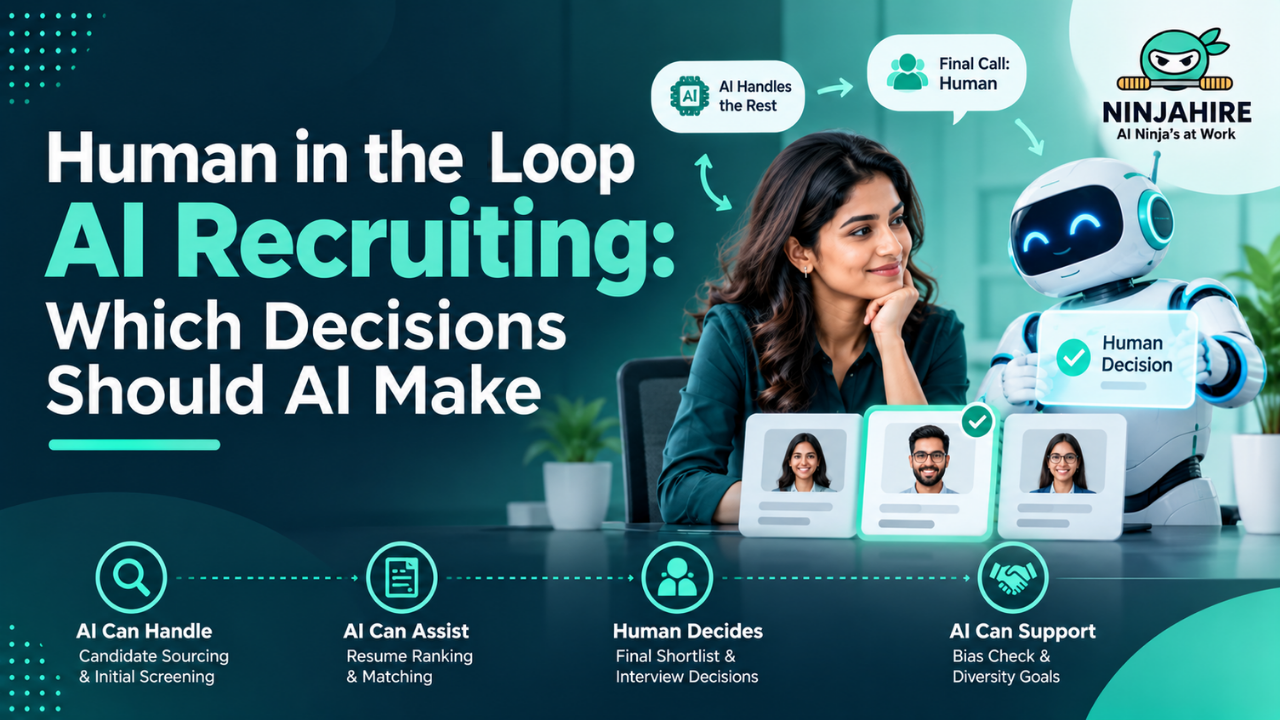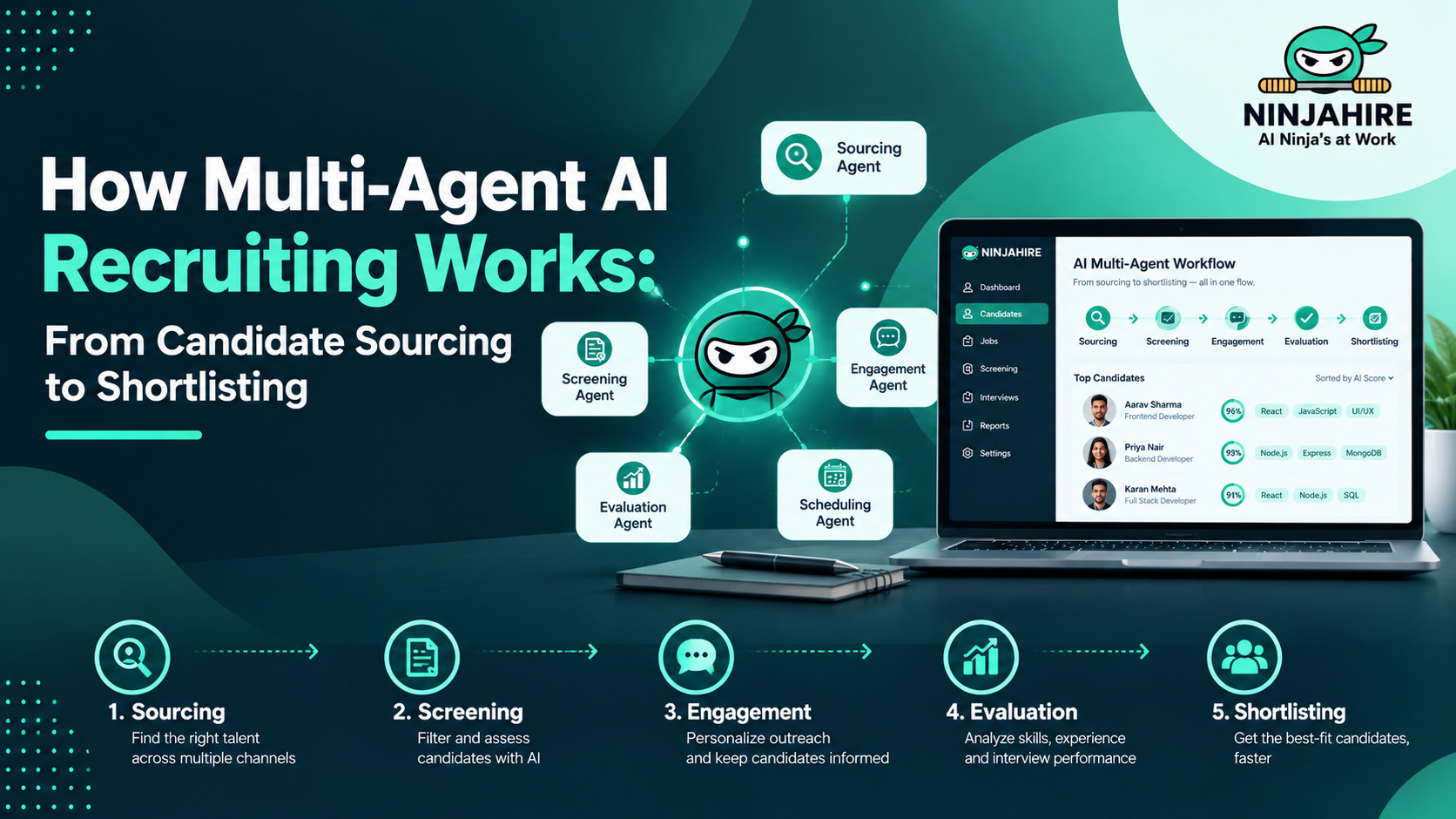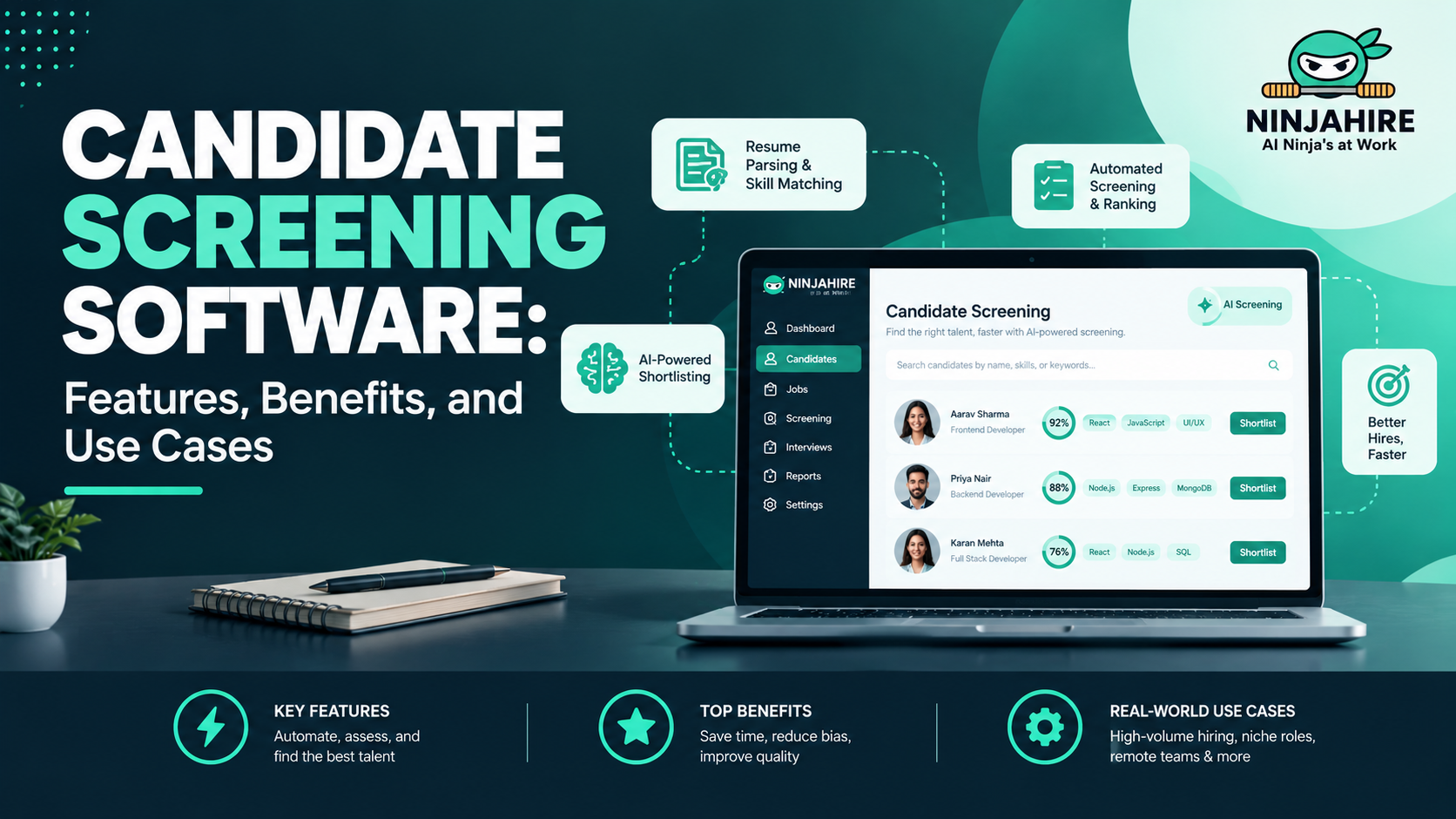
Candidate screening software helps recruiting teams evaluate applicants against job requirements before they reach later stages of the hiring process. Modern platforms can automate resume review, qualification matching, screening questions, candidate assessments, interview scheduling, scoring, and shortlist creation.
For high-volume recruiting teams, the main benefit is capacity. Recruiters can evaluate more candidates without manually reviewing every resume or conducting every initial screening call. The best candidate screening software also connects screening results with the ATS, recruiting workflow, and human review process.
The adoption of AI technologies has made the trend even more evident. As LinkedIn's Future of Recruiting 2025 report says, 37% of firms have been implementing and testing out the use of generative AI for the purposes of recruiting to ease hiring processes. Meanwhile, by 2026, 53% of those recruiters who were experiencing difficulties with hiring blamed the growth of AI applications as one of their concerns.
The right platform, however, should not be selected simply because it has AI. Recruiting teams need to evaluate screening accuracy, configurable criteria, candidate experience, integrations, transparency, scalability, and human oversight.
What Is Candidate Screening Software?
Candidate screening software is technology that helps recruiters identify applicants who meet the requirements of a specific role.
Traditional screening often requires recruiters to manually:
- Open and review resumes
- Compare experience with job requirements
- Verify basic qualifications
- Conduct initial phone screens
- Ask pre-screening questions
- Record candidate responses
- Compare applicants
- Schedule qualified candidates
- Update the ATS
Candidate screening software automates some or all of these activities.
Depending on the platform, screening can involve resume parsing, skills matching, knockout questions, assessments, phone interviews, video interviews, web-based interviews, candidate scoring, and recruiter review.
AI-powered candidate screening goes further by interpreting candidate information in context rather than relying only on exact keyword matches.
For example, a role may require experience managing enterprise cloud infrastructure. A capable screening system can evaluate relevant experience across a candidate's resume and screening responses instead of simply checking whether the exact phrase “enterprise cloud infrastructure” appears.
What Features Should Candidate Screening Software Have?
The most useful candidate screening platforms combine several capabilities instead of treating screening as a single resume-filtering function.
1. Resume and Candidate Profile Screening
Resume screening is the foundation of many candidate screening systems.
The software should be able to extract relevant information such as:
- Skills
- Job titles
- Work experience
- Education
- Certifications
- Industry experience
- Location
- Relevant projects
AI-powered systems can then compare this information with the requirements of an open position. The goal is to identify relevant evidence rather than simply count keyword matches.
2. Candidate Matching and Ranking
Candidate matching evaluates how closely an applicant aligns with a specific role.
Useful systems allow recruiters to define:
- Required qualifications
- Preferred skills
- Experience levels
- Certifications
- Location requirements
- Availability
- Role-specific competencies
The platform can then rank candidates based on those criteria.
This is particularly valuable when recruiters receive hundreds or thousands of applications and need to determine where human attention should begin.
3. Automated Screening Questions
Candidate screening software should support structured pre-screening questions.
These questions can verify information that may not be clear from a resume, such as:
- Work authorization
- Availability
- Shift preferences
- Salary expectations
- Years of relevant experience
- Technical knowledge
- Industry-specific qualifications
- Willingness to travel
Knockout questions can also identify candidates who do not meet mandatory requirements.
4. AI-Powered Phone, Video, and Web Screening
More advanced candidate screening platforms can conduct automated interviews.
Ninjahire, for example, supports phone, video, and web-based screening. Its AI Screening Agent can ask questions tailored to a candidate's resume, apply configurable scoring rubrics and knockout criteria, and produce ranked results with transcripts and summaries.
This gives recruiters another source of candidate evidence beyond the resume.
5. Candidate Scoring and Evaluation
Scoring converts screening information into a structured evaluation.
A recruiter-defined rubric might evaluate:
| Evaluation Area | Example Criteria |
|---|---|
| Technical skills | Required technologies and practical experience |
| Experience | Relevant years and role responsibilities |
| Communication | Clarity and relevance of responses |
| Certifications | Required or preferred credentials |
| Availability | Start date, shifts, or schedule |
| Role fit | Evidence aligned with job requirements |
The scoring model should be configurable rather than forcing every role through the same evaluation framework.
6. Candidate Ranking and Shortlists
Once candidates have been evaluated, the software should make the results easy to prioritize.
A ranked shortlist can help recruiters quickly identify:
- Strong matches
- Potential matches
- Candidates missing mandatory requirements
- Candidates requiring additional review
The ranking should remain a decision-support mechanism. Recruiters should be able to inspect the underlying evidence before advancing a candidate.
7. ATS and Recruiting Workflow Integrations
Integration is one of the most important features to evaluate.
Screening results should ideally flow into the existing recruiting system instead of creating another disconnected database.
Ninjahire states that its AI screening and interviewing workflows integrate with 50+ ATS platforms, allowing candidate information, scores, and transcripts to move into recruiting workflows.
For enterprise recruiting and staffing agencies, VMS integrations can also be important when candidates are sourced and submitted through managed workforce programs.
8. Reporting and Screening Documentation
A useful platform should create an accessible record of the screening process.
This can include:
- Candidate scores
- Interview transcripts
- Screening summaries
- Qualification results
- Recruiter notes
- Evaluation reports
Documentation makes it easier for recruiters and hiring managers to understand why a candidate was shortlisted.
What Are the Benefits of Candidate Screening Software?
The primary benefit is reducing repetitive screening work while increasing the number of candidates a recruiting team can evaluate.
Faster Candidate Evaluation
Automated screening can process candidate information continuously instead of requiring recruiters to review every application manually.
For high-volume teams, this can reduce delays between application, screening, and recruiter review.
Greater Recruiter Capacity
Recruiters spend significant time on administrative work. Automating repetitive screening allows more time for activities that require human interaction, such as candidate engagement, hiring-manager communication, interviewing, negotiation, and closing.
SHRM reports that 89% of organizations using AI in HR identify increased efficiency as a benefit, while 36% report lower hiring costs and 24% report improved identification of top candidates.
More Consistent Screening
Human screening can vary depending on workload, experience, and individual interpretation.
A defined screening rubric gives candidates a more consistent evaluation framework.
This does not automatically make the process unbiased. The criteria themselves still need to be job-related, appropriate, and regularly reviewed.
Better High-Volume Recruiting
Candidate screening software becomes particularly valuable when applicant volume increases.
A staffing agency managing multiple requisitions may need to process hundreds of applicants for one role while simultaneously working on several client requirements. Automation can help teams maintain screening capacity without scaling recruiter headcount at the same rate.
Faster Shortlist Creation
When screening results are automatically scored and ranked, recruiters can move from a large applicant pool to a smaller review set more quickly.
Ninjahire's published case study describes a high-volume staffing deployment in which the organization reported an 82% reduction in average candidate screening time and an increase in daily screening throughput. These are company-reported case-study results rather than independent industry benchmarks.
What Are the Best Use Cases for Candidate Screening Software?
Candidate screening software can support many recruiting environments, but the strongest use cases typically involve high application volume, repetitive qualification requirements, or urgent hiring timelines.
Staffing Agencies
Staffing agencies often manage multiple clients, job orders, candidate pools, and deadlines simultaneously.
Candidate screening software can help agencies:
- Screen applicants across multiple roles
- Apply different rubrics for different clients
- Conduct first-round interviews
- Rank candidates
- Create qualified shortlists
- Move results into ATS or VMS workflows
Ninjahire specifically positions its screening workflow for staffing agencies managing high-volume recruiting across multiple clients.
High-Volume Operational Hiring
Industries such as logistics, manufacturing, warehouse operations, hospitality, healthcare staffing, and customer support can generate large applicant volumes.
Screening software can handle initial qualification checks before recruiters focus on candidates who meet the basic requirements.
Technical Recruiting
Technical roles often require screening for specific skills and experience.
AI screening software can combine resume evidence with role-specific questions to evaluate candidates more deeply than a simple keyword filter.
For example, a software engineering screen could assess experience with a technology stack, architecture decisions, debugging experience, or specific project responsibilities.
Healthcare Staffing
The healthcare recruitment process may contain mandatory licensing, certification, specializations, and availability conditions.
The software that is used for screening may be helpful in sorting all these aspects out and finding people that are meeting the set criteria. But automated credential verification does not equal verified credentials. Recruitment professionals need to verify all the licenses and certificates with the corresponding authorities.
MSP and Enterprise Recruiting
Organizations implementing enterprise staffing systems may have workflows that are structured, service level agreements, ATS/VMS integration, and high volume of candidates. The use of automated screening will create a scalable stage one evaluation process without disturbing the recruitment framework that the organization uses.
Prior to the implementation of the screening tool, it is advisable to check whether the screening will lead to disparate impact on relevant demographics and whether the criteria used in screening are job-related.
How Should Recruiting Teams Evaluate Candidate Screening Software?
A practical evaluation should focus on workflow fit rather than the number of AI features listed on a vendor's website.
| Evaluation Area | Questions to Ask |
|---|---|
| Screening quality | Can the system evaluate qualifications in context? |
| Customization | Can recruiters configure rubrics and knockout criteria? |
| Interview formats | Does it support phone, video, and web screening? |
| Candidate experience | Is the process accessible and understandable for applicants? |
| Integrations | Does it connect with the existing ATS or VMS? |
| Transparency | Can recruiters review the evidence behind scores? |
| Scalability | Can it handle current and expected candidate volume? |
| Reporting | Are transcripts, summaries, and evaluation results available? |
| Human oversight | Can recruiters review or challenge automated recommendations? |
| Governance | Can the organization monitor outcomes and potential bias? |
The last two areas deserve particular attention.
The EEOC states that employment tests and selection procedures can violate federal anti-discrimination laws if they intentionally discriminate or disproportionately exclude protected groups without sufficient legal justification.
SHRM has also highlighted the risk of excessive reliance on algorithmic hiring judgments and the need for organizations to validate AI-enabled hiring processes.
For that reason, candidate screening software should be implemented as part of a controlled hiring process, not as an unexplained automated gatekeeper.
Where Does Ninjahire Fit?
Ninjahire combines candidate sourcing, outreach, screening, and interviewing into a connected AI recruiting platform.
Its AI Screening Agent supports three screening formats:
- Phone interviews
- Video interviews
- Web-based interviews
Recruiters can configure scoring rubrics and knockout criteria, while the system generates candidate scores, transcripts, summaries, and ranked results. Ninjahire states that its screening agent can handle up to 100 parallel screening conversations.
The platform also connects screening with broader recruiting workflows. Its AI sourcing, outreach, and screening agents allow candidates to move from sourcing and engagement into automated screening before recruiters review the resulting shortlist.
This makes the platform particularly relevant for staffing agencies and recruiting teams that need to increase screening capacity without turning the recruiting process into a fully automated black box.
The recruiter remains responsible for interpreting candidate information and making the appropriate hiring or placement decision.
Conclusion
Candidate screening software has evolved from basic resume filtering into a broader recruiting capability. Modern platforms can combine resume analysis, candidate matching, structured screening questions, AI-powered interviews, scoring, ranking, reporting, and ATS integration. These capabilities can help recruiting teams process higher candidate volumes, create shortlists faster, and reduce repetitive administrative work.
The strongest solution is not necessarily the platform with the most AI features. It is the platform that fits the recruiting workflow, evaluates candidates against clearly defined job requirements, provides useful evidence behind its recommendations, integrates with existing systems, and keeps recruiters involved in important decisions.
For staffing agencies and high-volume recruiting teams, that combination can turn candidate screening from a manual bottleneck into a scalable part of the hiring workflow.